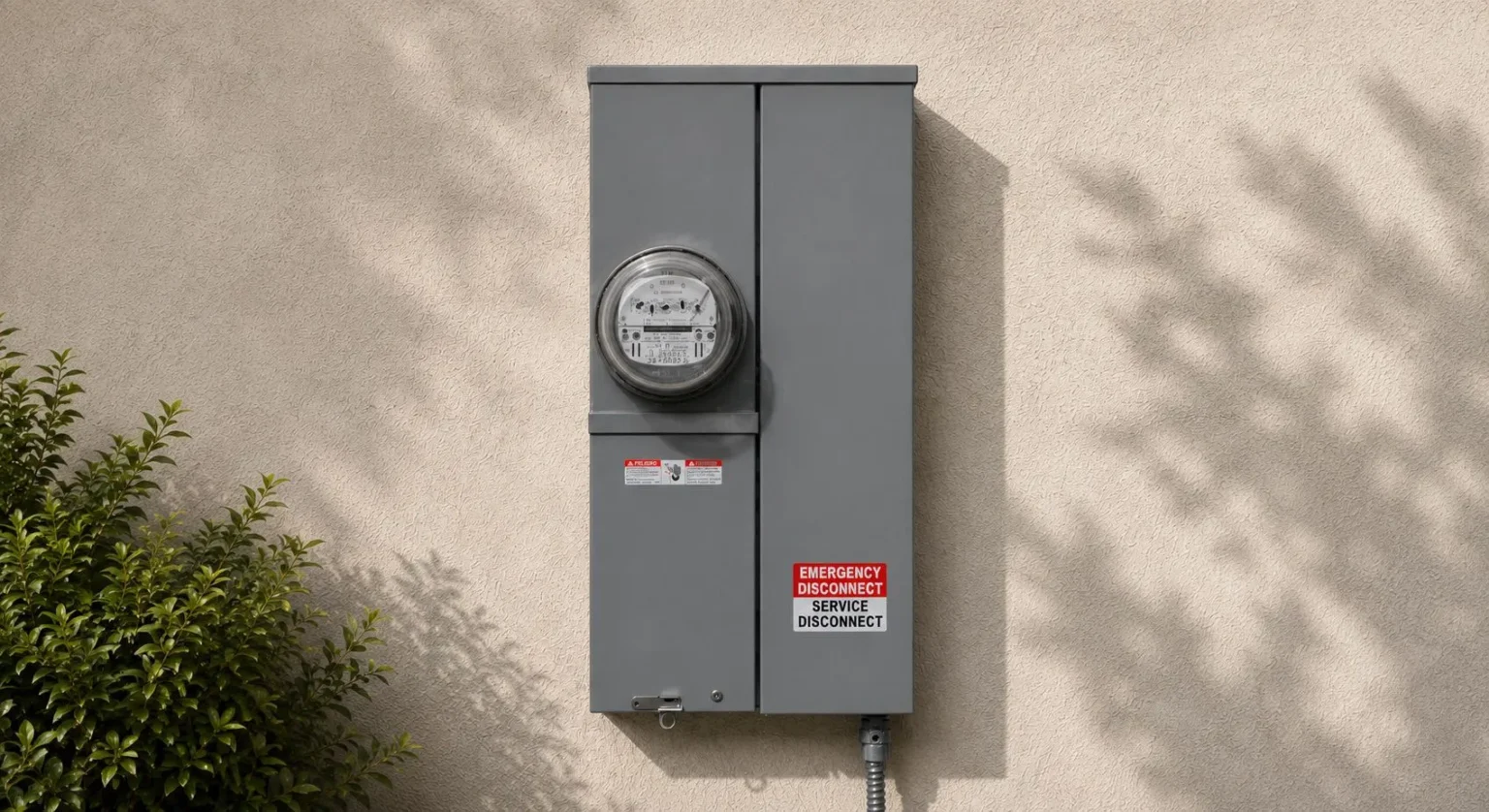
An electrical panel upgrade—often referred to in the electrical trade as a “service upgrade” or “heavy-up”—is necessary whenever your current main breaker box can no longer safely supply the total electrical demand of your household, exhibits physical signs of thermal degradation, or utilizes obsolete panel hardware associated with fire hazards.
Most residential panels have a functional lifespan of 25 to 40 years. If your home was built before 2000 and still relies on its original 60-amp or 100-amp service, your system is likely operating near or beyond its safe thermal limit. Upgrading to a modern 200-amp panel restores safety, aligns your home with current National Electrical Code (NEC) standards, prevents electrical fires, and provides the capacity required for high-draw modern technologies such as electric vehicle (EV) chargers, heat pumps, and induction ranges.
What Is an Electrical Panel and How Does It Work?
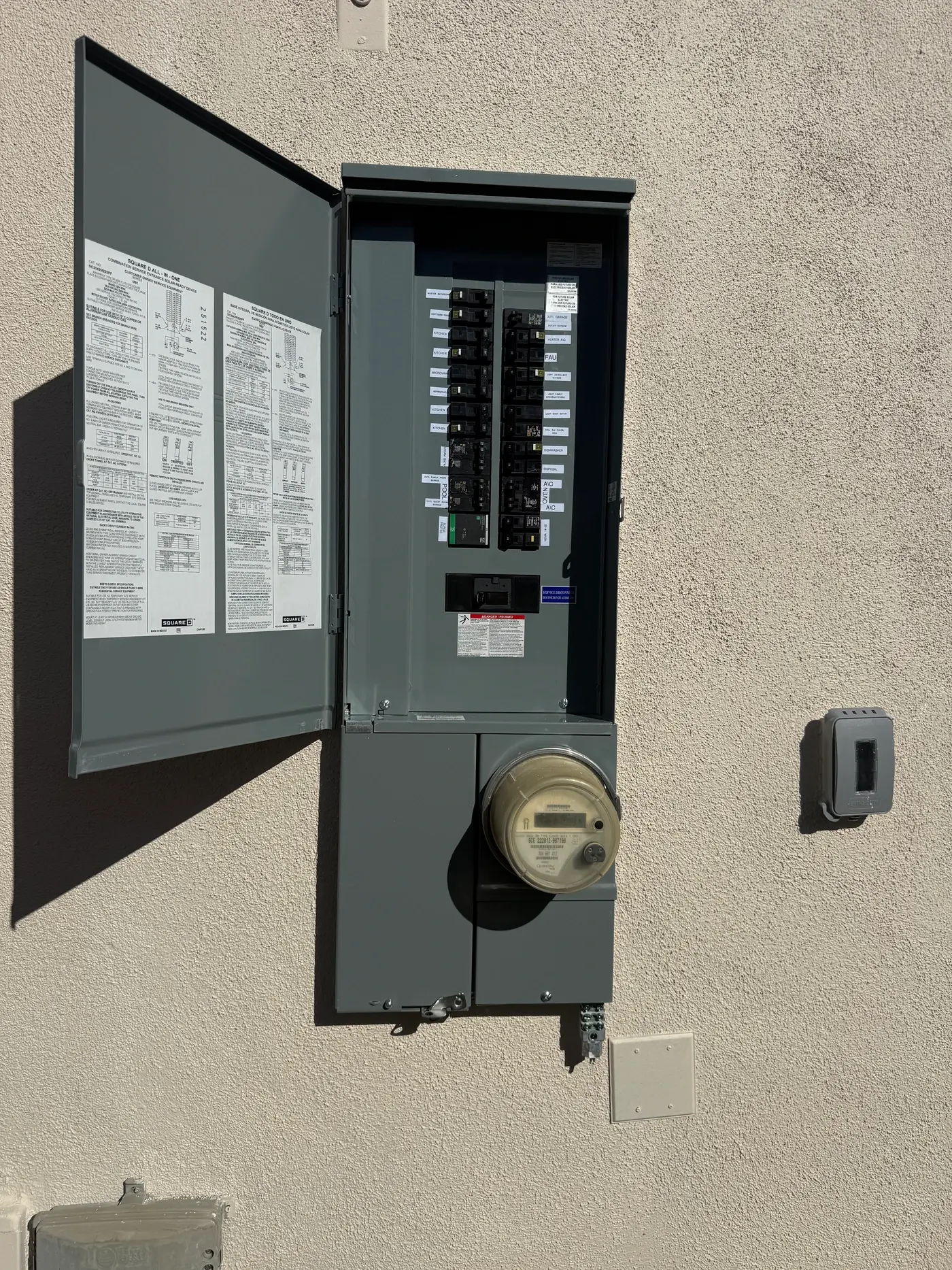
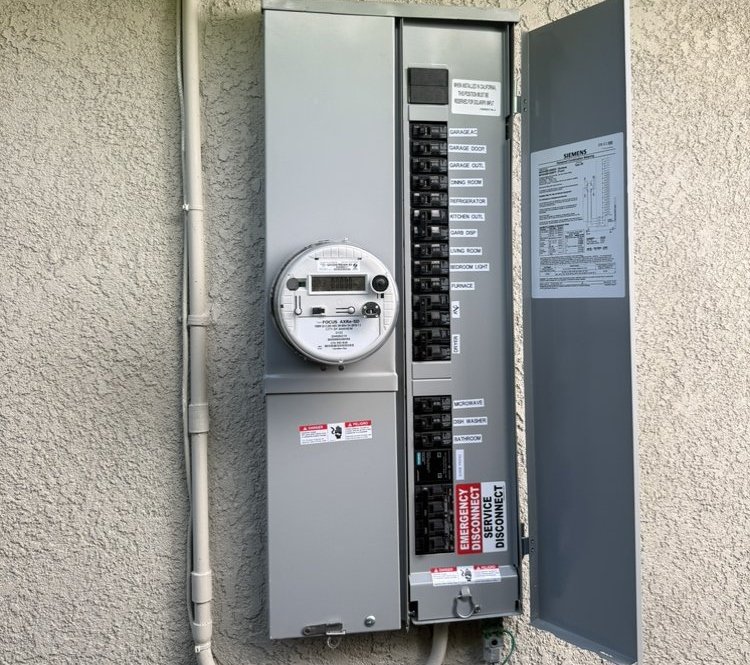
Your electrical panel serves as the central distribution hub for your entire home. Electricity flows from the utility line through your meter into the main breaker panel, where it passes through a main circuit breaker before being distributed across individual branch circuits.
Inside the panel, two copper or aluminum bus bars carry electric current down the center. Individual circuit breakers clip onto these bus bars, directing electricity through hot wires to specific rooms, dedicated outlets, and major appliances throughout your property.
Utility Power Line ➔ Electric Meter ➔ Main Breaker Box ➔ Branch Circuit Breakers ➔ Outlets & AppliancesWhen a circuit draws more current than its rating permits (an overload) or when a hot wire directly contacts a neutral wire (a short circuit), the bimetallic strip inside the circuit breaker heats up and trips, breaking the connection. This automatic shutoff prevents house wiring from melting and catching fire.
Why You Need an Electrical Panel Upgrade
While electrical panels sit quietly tucked away in basements, garages, or utility closets, they are not permanent fixtures. Here are the primary reasons homeowners elect to replace or expand their electrical service.
ELECTRICAL PANEL?
1. Fire Prevention and Thermal Degradation
The Electrical Safety Foundation International (ESFI) reports that home electrical distribution systems cause tens of thousands of structure fires annually. Over decades, thermal expansion and contraction loosen mechanical connections on the panel’s bus bar. Loose connections create electrical resistance, which generates extreme localized heat. This thermal cycling can degrade wire insulation, melt breaker casings, and spark electrical fires inside the wall.
2. Modernizing Capacity for High-Demand Appliances
Homes constructed in the 1970s or 1980s were sized around a 60-amp to 100-amp total load—sufficient for a refrigerator, television, basic incandescent lighting, and standard kitchen outlets. Today’s households consume significantly more kilowatt-hours. A modern home equipped with central air conditioning, an electric clothes dryer, high-end kitchen electronics, and smart devices quickly pushes a 100-amp service past its continuous load capacity.
3. Electrification, Solar Integration, and EV Charging
Transitioning away from fossil fuels requires higher electrical throughput:
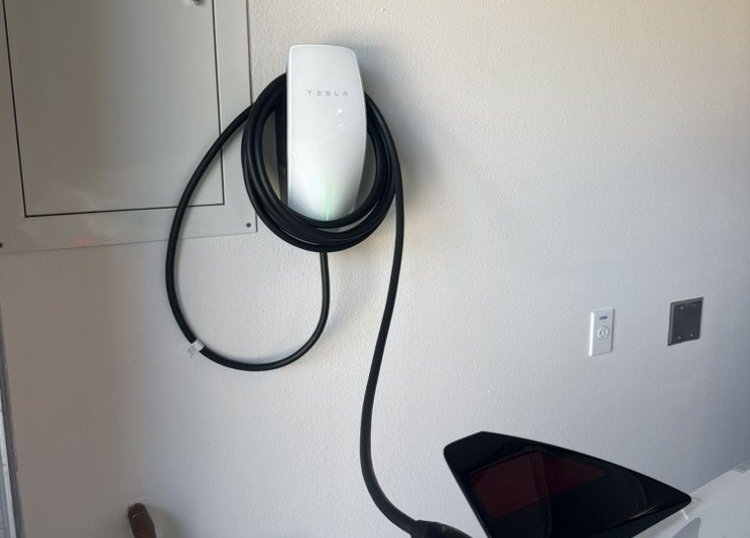
- EV Chargers: A Level 2 electric vehicle charger draws 40 to 50 continuous amps on a dedicated 240-volt double-pole breaker—consuming 25% to 50% of a standard 100-amp panel on its own.
- Heat Pumps & Hybrid Water Heaters: High-efficiency HVAC heat pumps and heat pump water heaters require multi-pole circuits with substantial peak starting wattages.
- Solar PV & Battery Storage: Solar installations require space for backfeed breakers, supply-side taps, or dedicated smart load management panels.
4. Code Compliance and Home Insurance Requirements
The National Electrical Code (NEC) updates every three years to mandate stricter residential protection. Modern standards require Arc Fault Circuit Interrupters (AFCI) on virtually all residential branch circuits and Ground Fault Circuit Interrupters (GFCI) in wet areas. Older panels often lack the physical space or neutral-bus configurations necessary to accept modern combination AFCI/GFCI breakers. Furthermore, home insurance underwriters increasingly refuse coverage or charge elevated premiums for homes containing panels with documented failure records.
When to Upgrade: 7 Clear Red-Flag Warning Signs
If your electrical system is struggling, it leaves clear physical and operational clues. Review the diagnostic checklist below to assess your panel’s condition:
| Warning Sign | Primary Root Cause | Urgency Level | Recommended Action |
| Frequent Breaker Tripping | Overloaded branch circuit or degraded bimetallic breaker spring | High | Reduce load; schedule a load calculation with an electrician |
| Flickering or Dimming Lights | Voltage drops caused by major appliance starting current | Medium-High | Inspect main service entry and branch circuit balance |
| Burning Odor / Scorch Marks | Arc tracking or melted insulation on bus bar connections | Critical Emergency | Shut off main disconnect immediately and call an electrician |
| Buzzing or Sizzling Sounds | Loose terminal screws or electrical arcing across contacts | Critical Emergency | Turn off affected circuit; schedule immediate service |
| Panel Warm to the Touch | Excessive resistance and thermal overload | High | Perform thermal imaging / professional panel check |
| Relying on Multiple Power Strips | Insufficient branch circuits and panel slot availability | Low-Medium | Add dedicated circuits via panel replacement |
| Obsolete Panel Brand or Fuse Box | Known design defects or outdated screw-in fuses | High | Schedule a full service upgrade |
Detailed Red-Flag Breakdown
Safety Warning: If you touch your panel door and feel noticeable heat, smell burning plastic or fishy odors near the enclosure, or hear a crackling sound, turn off the main circuit breaker if safe to do so, and contact a licensed residential electrician immediately. These signs indicate active arcing or thermal failure.
- Flickering Lights When Appliances Cycle On: When your air conditioner compressor or microwave starts, it draws a temporary spike in electric current (inrush current). If your panel cannot supply sufficient amperage, the system voltage dips across the entire panel, causing lights throughout the home to momentary dim or flutter.
- Relying on Subpanels or Tapped Breakers: Homeowners who run out of breaker slots often install tandem breakers (“cheater breakers”) or secondary subpanels without increasing their incoming main service line. If your main enclosure is packed beyond its original UL listing parameters, the entire assembly risk overheating.
Hazardous Panels: Is Your Breaker Box a Known Fire Risk?
1. Federal Pacific Electric (FPE) Stab-Lok
Certain electrical panel brands manufactured between the 1950s and 1980s have documented engineering flaws, high failure rates during short circuits, or outright safety recalls. If your wall contains any of the following units, replacement is strongly advised regardless of whether you notice active symptoms:
Installed in millions of homes built between 1950 and 1990, independent testing by the Consumer Product Safety Commission (CPSC) and electrical research groups demonstrated that FPE Stab-Lok breakers fail to trip during sustained overloads or short circuits up to 60% of the time. When a breaker fails to trip, high current continues flowing through residential wiring until the conductors ignite structural wood or insulation.
2. Zinsco / GTE Sylvania
Popular throughout the 1970s, Zinsco panels feature bus bars made from a specific aluminum alloy prone to severe oxidation. Over time, the breaker contacts corrosion-weld directly to the bus bar. Once welded, the breaker cannot pop free during a fault, causing current to run uncontrolled and melting the enclosure from the inside out.
3. Pushmatic Panels
Pushmatic panels use push-button mechanisms rather than toggle switches. Over decades of disuse, the internal spring-loaded mechanical contacts corrode and lock into the “on” position. Even if the button appears depressed, internal contacts can remain closed during an overload.
4. Screw-In Fuse Boxes (60-Amp Max)
Screw-in fuse boxes (plug fuses) rely on a thin strip of metal that melts when current exceeds its rating. While functional in original configuration, these boxes rarely exceed 60 amps, lack modern GFCI integration, and encourage hazardous homeowner tampering—such as inserting coins behind blown fuses or using oversized 30-amp fuses on 15-amp wiring.
Sizing Your System: 100-Amp vs. 200-Amp vs. 400-Amp
When planning an electrical panel replacement service, choosing the right amperage rating ensures your home is equipped for current and future electricity demands.
| Service Rating | Recommended Property Type | Typical Household Electrical Load | Future Expansion Potential |
| 60 Amp | Small cabins or historic homes (Obsolete) | Lighting, basic outlets, gas appliances only | None (Exceeds capacity rapidly) |
| 100 Amp | Condos or small single-family homes (<1,500 sq. ft.) | Standard appliances, central AC, gas heating | Limited (Cannot support Level 2 EV charging well) |
| 200 Amp | Standard single-family homes (1,500–3,500 sq. ft.) | All electric appliances, central HVAC, EV charger | High (Standard for modern residential homes) |
| 400 Amp | Large estates (>3,500 sq. ft.) or multi-unit builds | Multiple HVAC units, pool heaters, dual EV chargers | Maximum (Supports commercial-grade residential loads) |
Calculating Your Required Amperage
Electricians calculate home electrical requirements using NEC Article 220 load calculation protocols:
- General Lighting & Receptacle Load: Calculated at 3 watts per square foot of living space.
- Small Appliance Circuits: Minimum of two 20-amp kitchen branch circuits (1,500 VA each) plus a dedicated laundry circuit.
- Fixed Fastened Appliances: Nameplate kilowatt ratings for electric water heaters, dishwashers, garbage disposals, and wall ovens.
- Heating & AC (Largest Demand): 100% of the motor nameplate rating for central air conditioning or electric space heating.
- Electrification Additions: Dedicated allowances for an EV charger installation (typically 7.6 kW to 11.5 kW continuous draw).
For over 90% of modern single-family residences, a 200-amp main breaker panel represents the optimal balance of capacity, safety overhead, and cost efficiency.
What to Expect During an Electrical Panel Upgrade
Upgrading an electrical panel requires technical expertise, municipal permitting, and coordination with your electric utility company.
1. Site Inspection & Load Calculation
   └─ Electrician evaluates physical wiring, grounding electrodes, and total wattage demands.

2. Permitting & Utility Coordination
   └─ Municipal permits filed; utility schedule arranged for main service disconnect.

3. Main Disconnect & Equipment Installation
   └─ Power cut at transformer; old panel removed; new enclosure, bus bars, and breakers mounted.

4. Grounding & Bonding Upgrade
   └─ New grounding electrode conductors (ground rods & water pipe bonds) installed to current code.

5. Circuit Transfer, Labeling & Inspection
   └─ Branch circuits reconnected, tested, and labeled; local building inspector signs off.
- Initial Site Evaluation and Load Calculation: A licensed technician inspects your existing panel, service entry drop, meter socket, and grounding system. They calculate your household peak demand to verify whether the utility service drop line needs to be upsized.
- Permitting and Utility Scheduling: The electrical contractor pulls required electrical permits from your local municipality and schedules a temporary power shutdown with your local utility provider.
- Power Interruption and Panel Ripping: On installation day, utility technicians pull the meter or disconnect power at the weatherhead. The electrician unbinds all branch circuits, removes the obsolete panel box, and mounts the new NEMA-rated enclosure.
- Upgrading Meter Socket and Service Entrance Conductors: If stepping up from 100-amp to 200-amp service, the entry conductors running from the roof weatherhead down through the meter socket to the main breaker must be replaced with larger gauge copper or aluminum wire (e.g., 2/0 copper or 4/0 aluminum).
- Grounding and Bonding Systems: Current electrical codes require installing copper water-pipe bonds and dual driven grounding rods spaced at least 6 feet apart outside the foundation wall.
- Circuit Transfer and AFCI/GFCI Installation: Individual branch circuits are landed onto new combination arc-fault and ground-fault breakers.
- Municipal Inspection and Power Restoration: The municipal electrical inspector reviews the installation. Upon passing, the utility company re-energizes the service drop, restores power, and seals the meter.
Cost Factors and Investment Breakdown
A standard residential electrical panel upgrade typically ranges between $1,800 and $4,500, depending on several structural variables:
- Amperage Increase: Moving from a 100-amp to a 200-amp service costs more than replacing a damaged 100-amp panel with a unit of identical capacity, as the former requires larger service entrance cables and a upsized meter socket.
- Utility Service Drops: If the utility line running underground or overhead from the transformer to your home is undersized, utility fees for cable replacement may apply.
- Grounding Upgrades: Replacing old grounding electrodes to meet current NEC requirements adds modest material and labor costs.
- Subpanel Additions: If your property features detached structures, workshops, or finished basements, adding a secondary subpanel increases overall project scope.
Frequently Asked Questions
1. How long does it take to upgrade an electrical panel?
A standard residential panel replacement takes between 4 and 8 hours to complete. During this window, main power to your home will be temporarily turned off. Most upgrades are completed in a single working day, with power restored by late afternoon once the municipal inspector grants approval.
2. Can I upgrade my own electrical panel to save money?
No. Upgrading an electrical panel requires working directly with uninsulated utility service lines that carry lethal voltage even when the main breaker is turned off. Municipalities require licensed electrical contractors to pull permits, perform service entrance work, and pass building inspections.
3. How do I know if my panel is a 100-amp or 200-amp service?
Check the main circuit breaker located at the top or bottom of your electrical panel. The main breaker handle is stamped with a number indicating its maximum continuous amperage—typically 60, 100, 125, 150, or 200. If your main breaker switch displays “100,” you have 100-amp service.
4. Will upgrading my electrical panel lower my electric bill?
An electrical panel upgrade does not directly reduce energy consumption, as electrical panels deliver power rather than consume it. However, a modern panel improves electrical distribution efficiency, reduces resistance heat loss across loose contacts, and allows you to install energy-efficient technologies like smart load management systems, solar storage, and heat pumps.
5. What is the difference between a main panel replacement and adding a subpanel?
A main panel replacement removes your existing main disconnect enclosure and increases the total electrical power entering your home from the utility company. Adding a subpanel creates an secondary distribution board that draws power from your existing main panel to organize additional circuit slots without increasing your home’s total incoming amperage capacity.
6. Do insurance companies require electrical panel upgrades?
Yes, many home insurance carriers require homeowners to replace known high-risk panels—such as Federal Pacific Electric (Stab-Lok), Zinsco, or screw-in fuse boxes—as a condition of issuing or renewing a policy. Outdated systems are classified as structural fire hazards, which can trigger policy cancellation or denied claims following an electrical fire.
Protect Your Home with Professional Electrical Service
Your electrical panel is the foundation of your home’s safety and modern power capabilities. If your panel is over 25 years old, frequently trips, or exhibits signs of thermal strain, waiting for a failure can lead to severe safety risks or costly emergency repairs.
Whether you are preparing for an EV charger, remodeling your home, or seeking peace of mind, consult with certified professionals to evaluate your system. Explore our local electrical services or contact the team at Benitex Electric today to schedule a comprehensive panel inspection and load calculation.