You probably have a power strip behind your TV and think your electronics are protected. They are only partly covered. Your refrigerator, HVAC system, EV charger, washer, and every hardwired smart device in your home are exposed to power surges every single day.
A whole house surge protector closes that gap. It sits at your electrical panel and stops damaging voltage spikes before they reach any circuit in your home. In this guide, our Orange County electricians explain how these devices work, what they cost in 2026, whether they are worth it, and why California code now requires one in many homes.
What Is a Power Surge?
A power surge is a sudden, brief spike in voltage above the normal 120 or 240 volts your home is designed for. Most surges last only microseconds, but that is enough to damage the delicate circuit boards found in modern appliances.
Many homeowners assume surges only come from lightning. In reality, they come from two directions.
External surges enter through the utility lines. They are caused by lightning strikes, grid switching, downed power lines, and power being restored after an outage. Orange County homeowners see more of these during Southern California Edison’s Public Safety Power Shutoffs, when power is cut and then restored across whole neighborhoods.
Internal surges start inside your own home. Every time a large motor or compressor cycles on and off, such as your air conditioner, refrigerator, pool pump, or dryer, it sends a small spike through your wiring. These smaller surges are far more frequent, and over time they slowly wear down electronics.
What Is a Whole House Surge Protector?
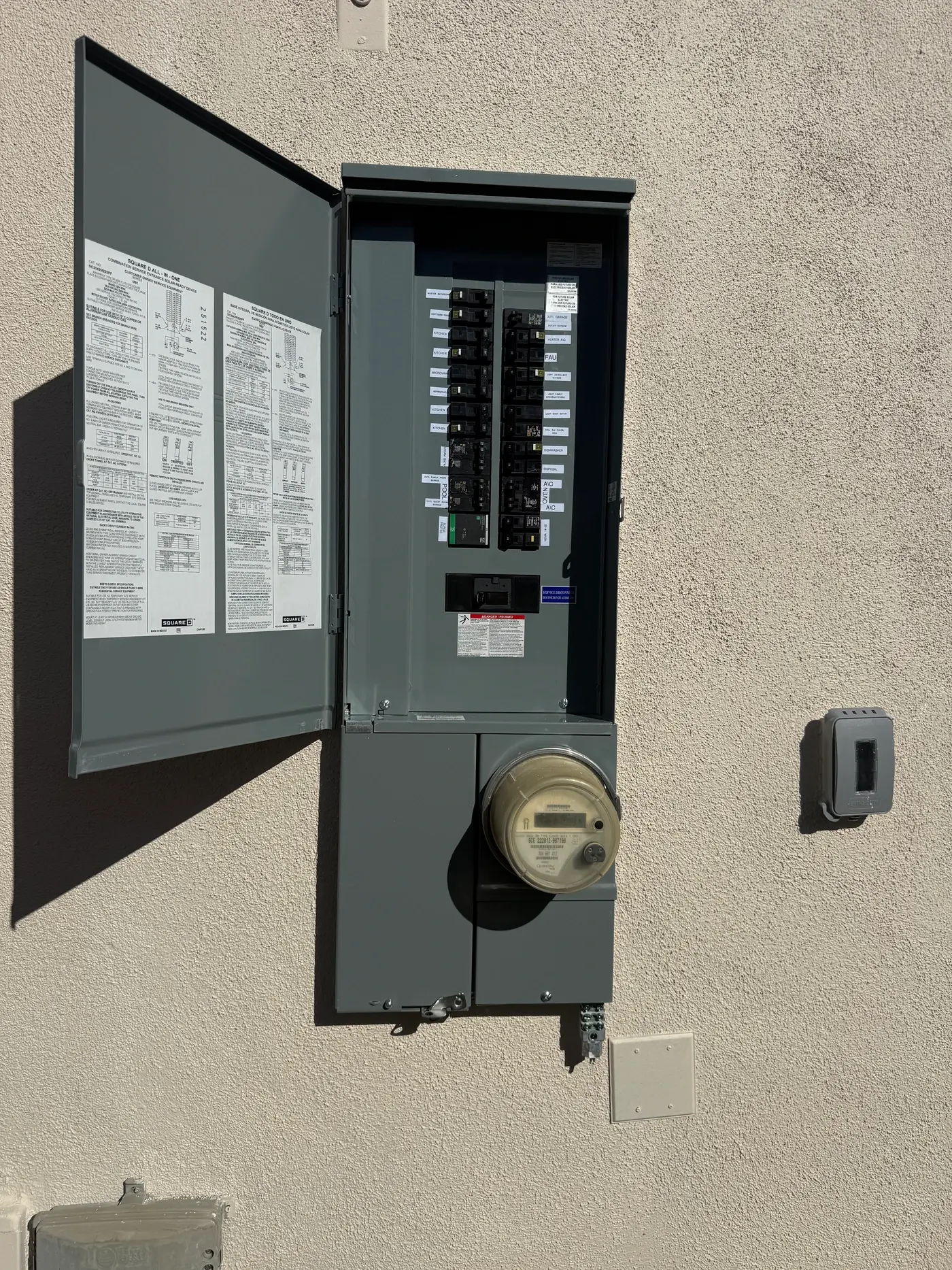
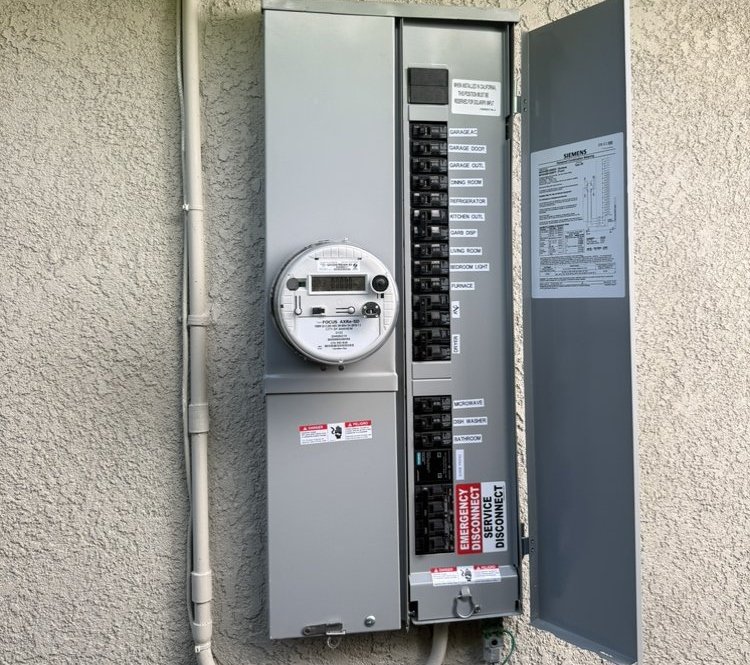
A whole house surge protector, also called a whole home surge protector or surge protective device (SPD), is installed at your main electrical panel or meter. It monitors incoming voltage and diverts any excess energy safely to the ground before it can travel through your home’s circuits.
Think of it as a security guard at the front door of your electrical system. Plug-in power strips guard individual rooms. A whole house unit guards the entrance to the entire house.
How Does a Whole House Surge Protector Work?
Inside the device are components called metal oxide varistors (MOVs). Under normal voltage, they do nothing. When voltage jumps above a safe threshold, the MOVs instantly become conductive and send the extra energy to your grounding system.
The process happens in nanoseconds:
- A surge enters through the utility line or starts at a large appliance.
- The surge protector detects voltage above its clamping level.
- It diverts the excess energy to the ground wire.
- Normal voltage continues flowing to your circuits.
- The device resets and waits for the next surge.
Most units have indicator lights that show whether protection is still active. After absorbing many surges or one very large one, the MOVs wear out, and the light tells you it is time for a replacement.
The 3 Types of Surge Protection
Not all surge protectors do the same job. The industry standard, UL 1449, sorts them into three types based on where they are installed.
| Type | Where it installs | What it protects against | Who installs it |
| Type 1 | Between the utility meter and main breaker | Large external surges, including lightning | Licensed electrician |
| Type 2 | At the main electrical panel | External and internal surges for all circuits | Licensed electrician |
| Type 3 | At the outlet (power strips, plug-in units) | Small surges at one device | Homeowner |
For most Orange County homes, a Type 2 whole house surge protector at the panel is the right choice. Pair it with Type 3 plug-in protectors for sensitive electronics like computers, gaming consoles, and home theater systems. This layered approach gives you the best protection.
Is a Whole House Surge Protector Worth It?
For most homeowners, yes. The math is simple. A professionally installed unit usually costs a few hundred dollars. A single surge that damages a refrigerator control board, an HVAC compressor, or an EV charger can cost more than that to repair.
Today’s homes are packed with sensitive electronics that did not exist 20 years ago. Modern appliances like smart refrigerators, induction cooktops, tankless water heaters, and variable-speed HVAC systems all rely on circuit boards that are easily damaged by voltage spikes.
A whole house surge protector is especially worth it if you have:
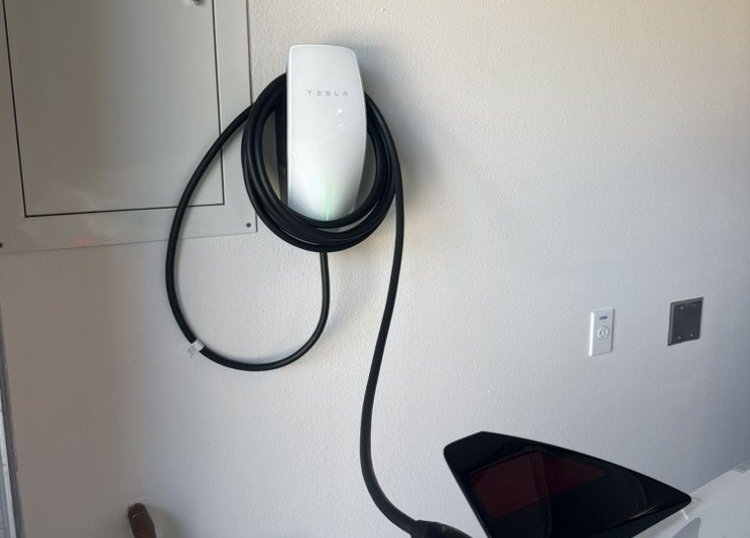
- An EV charger. A Level 2 charger is a significant investment. If you have one, or plan to add one, our guide to what a Level 2 EV charger is explains why it deserves protection.
- Solar panels or a home battery. Inverters and battery systems contain expensive electronics.
- Smart home systems. Hardwired smart switches, security systems, and thermostats are vulnerable.
- High-end appliances. Anything with a digital display or touch controls has a circuit board inside.
- A home office. Computers, routers, and printers keep your work running.
The one situation where it may matter less is a home with very few electronics. Even then, it protects the HVAC system and refrigerator, which are two of the most expensive items in any home.
Does California Require a Whole House Surge Protector?
In many cases, yes. The National Electrical Code (NEC), starting with its 2020 edition, requires surge protection for dwelling units whenever an electrical service is installed or replaced. California adopts the NEC through the California Electrical Code, so this rule applies here.
In practical terms, this means that if you are getting a panel upgrade, a service change, or building a new home, your electrician must include a surge protective device. If you are planning an upgrade, our team handles electrical panel upgrades in Orange County with surge protection included to meet code. You can also learn about the permit process in our guide on getting a permit for an electrical panel replacement in Orange County.
Whole House Surge Protector Cost in 2026
The whole house surge protector cost depends on the type, brand, and how easily it can be connected to your panel.
| Item | Typical cost |
| Type 2 surge protector (device only) | $75 – $350 |
| Type 1 surge protector (device only) | $150 – $500 |
| Installation labor | $200 – $500 |
| Total installed cost (Type 2) | $300 – $800 |
| Installed during a panel upgrade | Often $150 – $400 extra |
The most affordable time to add one is during a panel upgrade, because the electrician is already working in the panel. If your panel is aging, read our 7 warning signs your electrical panel is outdated before you decide. For full upgrade pricing, see how much it costs to upgrade an electrical panel.
Prices are approximate and vary by home. Visit our pricing page or request a quote for an exact number.
How to Choose the Best Whole House Surge Protector
When you compare models, the brand name matters less than these four specifications.
Surge current rating (kA): This measures how much surge energy the device can handle. For residential use, look for at least 40 kA per phase. Higher ratings last longer.
Voltage protection rating (VPR): This shows how much voltage gets through during a surge. Lower is better. A rating of 600 to 700 volts is good for a 120/240-volt home.
UL 1449 listing: Only buy devices that are tested and listed to this safety standard.
Indicator lights and warranty: Status lights tell you when protection has worn out. Many manufacturers also offer connected equipment warranties.
Popular options include the Square D whole house surge protector, Eaton whole house surge protector, and Siemens whole house surge protector. The best choice is usually one made by the same brand as your panel, because it can plug directly into the breaker slots.
Whole House Surge Protector Installation: DIY or Professional?
You will find videos on how to install a whole house surge protector, but this is not a safe DIY project for most homeowners. Installation requires working inside a live electrical panel, connecting to the main bus, and verifying the grounding system.
Here is what a professional whole house surge protector installation includes:
- Inspecting your panel, grounding, and bonding.
- Choosing a device compatible with your panel brand.
- Shutting off power at the main breaker.
- Installing a dedicated double-pole breaker or connecting at the line side.
- Mounting the device and keeping lead wires as short as possible for best performance.
- Restoring power and confirming the indicator lights.
A surge protector only works as well as your grounding system. A licensed electrician will check that your ground rod and bonding meet code. If your panel is old or full, they may recommend an upgrade first. Not sure how much capacity you have? Our guide on how to determine your electrical panel size can help.
Signs Your Home Needs Better Surge Protection
Watch for these clues that surges are already affecting your home:
- Electronics or chargers failing sooner than expected
- Clocks on appliances resetting for no reason
- Lights flickering or dimming when large appliances start
- Power strips with burn marks or a dead protection light
- HVAC or refrigerator control boards that need repeated repair
Frequently Asked Questions
How long does a whole house surge protector last? Most last 5 to 10 years, depending on how many surges they absorb. Check the indicator light once or twice a year and replace the unit when protection is lost.
Does a whole house surge protector protect against lightning? It protects against surges from nearby strikes on utility lines. Nothing can fully protect against a direct lightning strike on your home.
Do I still need power strips if I have a whole house surge protector? Yes, for sensitive electronics. A whole house unit handles large surges, while plug-in protectors catch smaller ones close to the device.
Can a whole house surge protector be added to any panel? Most panels can accept one, but older or crowded panels may need modifications or an upgrade first.
Will a surge protector lower my electric bill? No. Its job is to protect your equipment, not reduce energy use.
Protect Your Home With Benitex Electric
A whole house surge protector is one of the most affordable ways to protect thousands of dollars of appliances, electronics, and EV equipment. For Orange County homes with solar, EV chargers, and smart devices, it is a small upgrade with a big payoff.
Benitex Electric installs code-compliant whole house surge protectors for homeowners in Irvine and across Orange County. Whether you need a standalone unit or want surge protection added to your EV charger installation or panel upgrade, our licensed electricians will recommend the right device for your system. Contact us today for a free estimate.