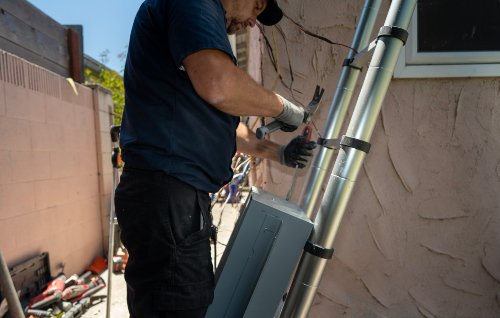
Meeting standard level 2 ev charger power requirements involves setting up a dedicated 240-volt electrical circuit, a double-pole circuit breaker, properly sized copper wiring (typically 6 AWG or 8 AWG), and a minimum electrical service panel capacity of 100 to 200 amps—along with securing a municipal electrical permit and inspection. Depending on whether you choose a plug-in unit (NEMA 14-50 or NEMA 6-50) or a hardwired EVSE (Electric Vehicle Supply Equipment), hardware connections must comply strictly with Article 625 of the National Electrical Code (NEC).
Transitioning from a standard Level 1 wall outlet (120-volt, 12-15 amps) to a Level 2 setup increases charging speeds by 5 to 8 times, recovering 25 to 45 miles of range per hour. However, because EV charging represents a continuous load (drawing full power continuously for more than three hours), your home’s setup must satisfy strict technical standards to prevent overheating, electrical fires, and panel overloads.
Technical & Electrical Requirements Summary
| Component / Parameter | Minimum Requirement | Notes / NEC Standard |
| Voltage Supply | 240V AC (Residential) or 208V AC (Commercial) | Requires a dedicated double-pole breaker |
| Panel Service Size | 100A minimum; 200A recommended | Load calculation determines if an upgrade or DLM is needed |
| Circuit Amperage | 30A, 40A, 50A, or 60A breaker | Continuous load rule requires 125% breaker sizing (NEC 625) |
| Wire Gauge (Copper) | 10 AWG (24A), 8 AWG (32A), 6 AWG (40A/48A) | THHN/THWN-2 in conduit preferred over NM-B Romex |
| Connection Type | NEMA 14-50 / NEMA 6-50 or Hardwired | Units 48A and above must be hardwired |
| Safety Mechanisms | GFCI Breaker (Plug-in) & Grounding | GFCI protection required for all plug-in EV outlets |
| Permits & Inspection | Local Municipal Electrical Permit | Mandatory in almost all jurisdictions |
1. Electrical Panel Capacity and Load Calculations
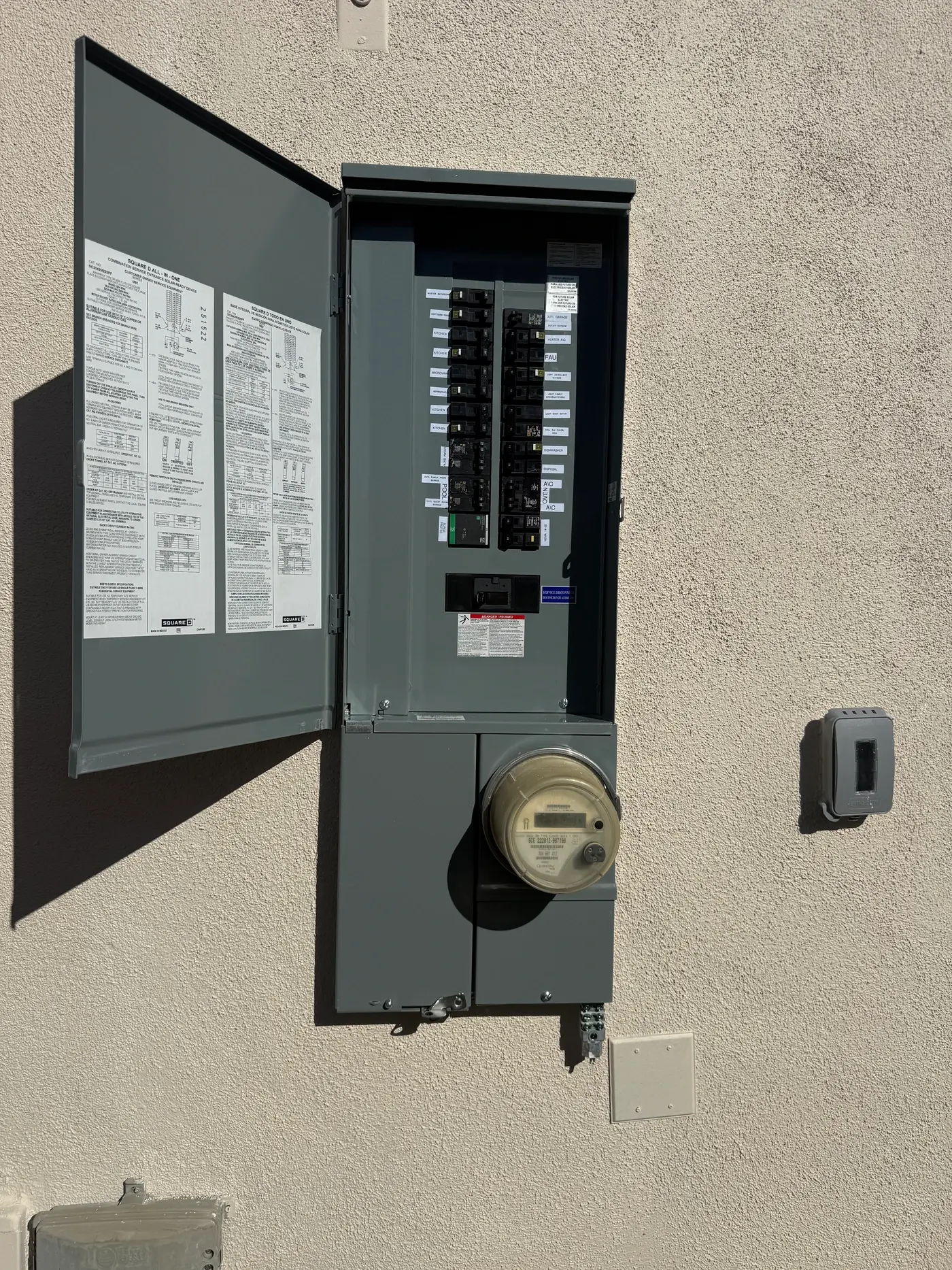
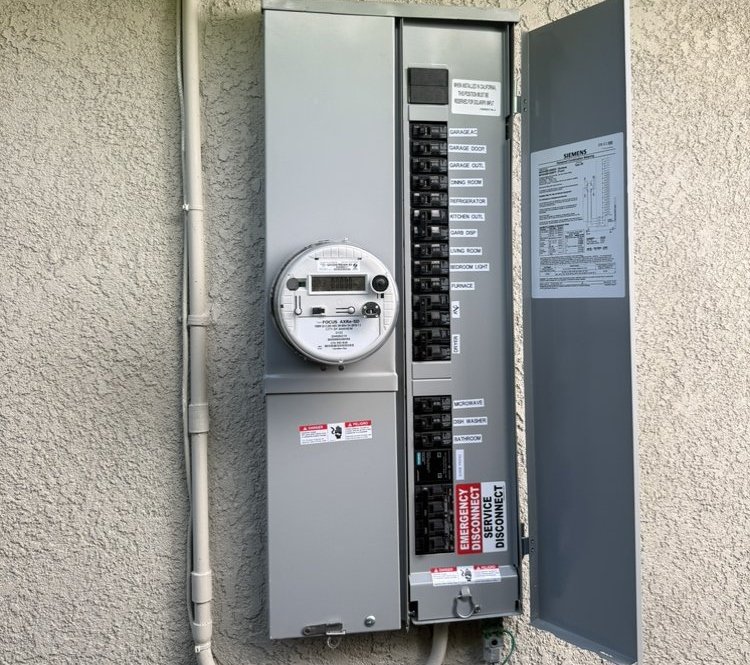
Before running wires or purchasing hardware, the primary step in evaluating level 2 ev charger power requirements is assessing your home’s total electrical panel capacity.
Electrical Service Amperage
- 100-Amp Panels: Common in older homes. While a 100A panel can sometimes accommodate a 30A or 40A circuit if major appliances (dryer, HVAC, range) run on gas, it frequently lacks headroom for higher-amp charging.
- 200-Amp Panels: The modern standard for single-family residential properties. A 200A electric panel generally supports a dedicated 50A or 60A EV circuit alongside routine household loads.
NEC Load Calculation (NEC Article 220)
You cannot simply count empty physical breaker slots to determine capacity. A licensed electrician performs a formal load calculation by adding up nameplate electrical ratings, applying demand factors, and subtracting the total from your service limit.
If your load calculation shows insufficient capacity, you have two options:
- Service Panel Upgrade: Upgrading your main service panel to 200A or 400A.
- Dynamic Load Management (DLM) / Smart Energy Monitors: Installing a smart load management system. DLM monitors total home consumption in real-time and throttles the EV charger’s output down when major appliances switch on, preventing panel overloads without requiring a full panel replacement.
2. The 125% Continuous Load Rule & Amperage Sizing
Under NEC Article 625, electric vehicle supply equipment is classified as a continuous load. This means the circuit breaker and conductors must be rated for at least 125% of the charger’s maximum continuous output:
$$\text{Circuit Breaker Size} = \text{Charger Output Current} \times 1.25$$
Standard Matching Configurations
- 24-Amp Charger (5.7 kW): Requires a 30-amp double-pole breaker.
- 32-Amp Charger (7.7 kW): Requires a 40-amp double-pole breaker.
- 40-Amp Charger (9.6 kW): Requires a 50-amp double-pole breaker.
- 48-Amp Charger (11.5 kW): Requires a 60-amp double-pole breaker.
- 80-Amp Charger (19.2 kW): Requires a 100-amp double-pole breaker (rare in single-family residential, common in commercial setups).
A common error is pairing a 48A charger with a 50A breaker. A 48A continuous draw requires $48 \times 1.25 = 60\text{ Amps}$. Operating a 48A charger on a 50A breaker will cause nuisance tripping and excessive heat buildup.
3. Wiring Requirements: Gauge, Temperature Ratings, and Conduit
Selecting the correct electrical conductor guarantees safe current transmission across the distance from your main panel to the charger location.
Main Electrical Panel
  │
  ▼
Double-Pole Breaker
  │
  ▼
THHN/THWN-2 Copper Wire in Conduit (Required for 60A / 48A Chargers)
  │
  ▼
Hardwired EVSE or NEMA Outlet
Wire Gauge Selection (Copper Conductors)
- 10 AWG: Rated for 30A breakers (24A continuous load).
- 8 AWG: Rated for 40A to 50A breakers depending on insulation rating.
- 6 AWG: Required for 60A breakers (48A continuous load).
- 4 AWG: Recommended for long wire runs (over 100 feet) to prevent excessive voltage drop.
THHN/THWN-2 in Conduit vs. NM-B (Romex)
While NM-B (Romex) cable is commonly used in residential construction, its temperature rating is limited to 60°C per NEC 334.80. Under this limit, 6 AWG NM-B is only rated for 55 amps, making it non-compliant for a 60-amp circuit feeding a 48A charger.
For high-power ev charger installations, individual THHN/THWN-2 copper conductors placed inside rigid PVC, EMT, or flexible metal conduit are preferred. THHN/THWN-2 is rated at 75°C/90°C, allowing 6 AWG copper to carry up to 65 amps safely and comfortably meet level 2 ev charger power requirements.
4. Hardwired vs. Plug-In (NEMA Outlets) Installations
Homeowners can choose between a direct hardwired connection or a wall outlet plug-in installation.
                  Level 2 EV Charger Connection
                                │
        ┌───────────────────────┴───────────────────────┐
        ▼                                               ▼
Plug-In Connection                             Hardwired Connection
• Uses NEMA 14-50 / 6-50                       • Wire directly into unit
• Limited to 40A max (50A breaker)             • Supports 48A+ (60A breaker)
• Requires GFCI breaker                        • Internal GFCI built-in
• Portable / Easy to replace                   • Weatherproof & cleaner
Plug-In Installation (NEMA 14-50 or 6-50)
- Maximum Output: Capped at 40A (50A breaker) per NEC guidelines for plug-and-socket connections.
- Receptacle Quality: Standard residential-grade outlets (often priced under $15) are designed for stove range plugs that are plugged in once and left alone. They frequently overheat or melt under sustained 40A EV draws. A commercial-grade or industrial-grade receptacle (e.g., Hubbell or Bryant) with heavy-duty brass clamping contacts is necessary.
- GFCI Protection: NEC 2020/2023 requires GFCI protection on all 150V-to-ground 50A receptacles in garages and outdoors. Some smart EV chargers have built-in GFCI self-testing, which can trigger duplicate nuisance trips when paired with a GFCI breaker.
Hardwired Installation
- Maximum Output: Allows 48A output on a 60A breaker (or higher for commercial units).
- Reliability: Eliminates physical plug connection points, reducing electrical resistance, heat accumulation, and contact wear.
- Cost Efficiency: Does not require a GFCI circuit breaker (saving $100–$150 on hardware) because the internal electronics of the EVSE handle ground fault detection.
For high-demand drivers, selecting a hardwired setup ensures faster charge rates and reduced equipment wear over time. If you need a site evaluation to confirm your home’s setup, consult our master electricians at Benitex Electric to evaluate your panel and wire paths.
5. Location, Environmental, and Mounting Considerations
Physical positioning affects both safety and day-to-day usability.
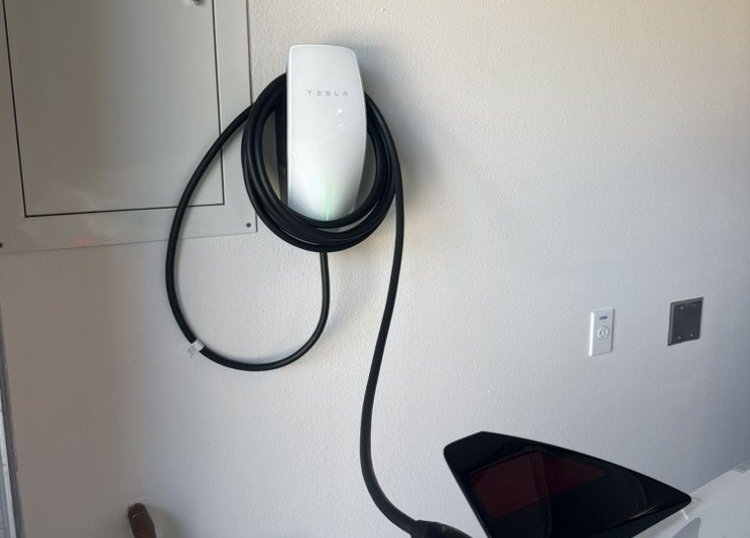
- Mounting Height: The charger unit should be mounted 48 to 54 inches above the floor for ergonomic plug access and to keep cables clear of water or ground debris (NEC standard).
- Outdoor Weatherproofing: Outdoor installations require hardware and junction boxes rated NEMA 3R or NEMA 4 to resist rain, ice, dust, and direct UV degradation.
- Cable Reach: Choose a location within 18 to 25 feet of your vehicle’s charging port. Standard EV cable lengths are 18 to 25 feet; avoid stringing cables tightly across walkways to eliminate trip hazards and strain on the vehicle port.
- Wi-Fi Strength: Smart chargers require a steady 2.4 GHz Wi-Fi signal at the mounting point for off-peak scheduling, energy monitoring, and firmware updates.
6. Permits, Inspections, and Building Codes
Installing a dedicated 240V circuit is a structural modification to your home’s electrical system.
[Permit Application Submitted] ──► [Installation by Licensed Electrician] ──► [Municipal Inspection & Sign-off]
- Permit Necessity: Municipalities require an electrical permit for Level 2 EVSE installations. Skipping a permit can void homeowner’s insurance coverage in the event of a fire, result in municipal fines, and create complications during home resale inspections.
- Utility Notification: Certain utility companies offer dedicated EV rate discounts or rebates ($500–$1,500) for installed smart chargers. Obtaining an inspection sign-off is usually a core prerequisite for claiming these incentives.
- Professional Installation: To maintain manufacturer warranties and satisfy local building codes, installation by a licensed electrical contractor is recommended. Our team at Benitex Electric handles panel calculations, municipal permit filing, and final inspection scheduling to guarantee full compliance.