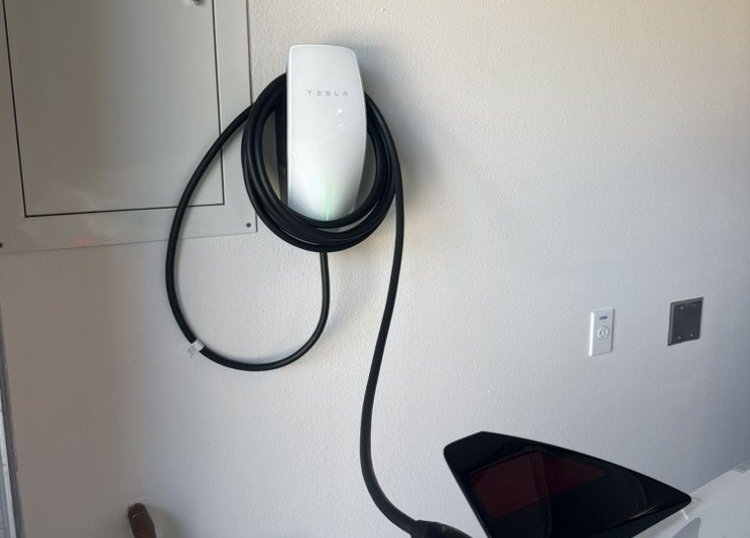
A Level 2 EV charger is a charging unit that supplies 240-volt alternating current (AC) power to your electric vehicle. It’s the type most EV owners use at home, at work and in apartment parking areas. It typically charges an EV three to seven times faster than the cable that comes with the car and is far less expensive than a fast public charger.
At Benitex Electric, we help homeowners, property managers and businesses choose and install EV charging equipment. This guide explains what you’d otherwise have to work out from spec sheets, so you can decide with confidence.
Level 2 EV Charger: The Short Answer
A Level 2 charger connects your EV to a 208–240V circuit, the same kind of supply used by an electric dryer or oven. Most units deliver between 3.3 kW and 19.2 kW, though 7 kW to 11.5 kW is the most common range for homes.
Two things are worth knowing up front:
- The charger isn’t really the “charger.” With AC charging, the conversion from AC to DC happens in the car’s onboard charger. The wall unit (technically called EVSE, electric vehicle supply equipment) safely delivers power and communicates with the car. This is why a powerful wall unit can’t charge a car faster than its onboard charger allows.
- Your car sets the ceiling. If your EV accepts 7.2 kW, a 11.5 kW charger won’t make it charge faster. It will simply run at 7.2 kW.
The Three Levels of EV Charging Compared
| Level 1 | Level 2 | Level 3 (DC Fast) | |
|---|---|---|---|
| Voltage | 120V AC | 208–240V AC | 400–1000V DC |
| Typical power | 1.2–1.9 kW | 3.3–19.2 kW | 50–350 kW |
| Range added per hour | About 3–5 miles | About 12–60 miles | About 100+ miles in 10–15 minutes* |
| Best for | Emergency or very low mileage | Daily home and workplace charging | Road trips and quick top-ups |
| Installation | Standard outlet | Dedicated circuit, usually electrician-installed | Commercial installation only |
Fast-charging speeds vary widely by vehicle and battery state of charge. Range figures are approximate and depend on vehicle efficiency, temperature and driving style.
For most drivers, Level 2 is the sweet spot. Level 1 is often too slow for anyone driving more than about 30–40 miles a day, and DC fast charging is expensive to use as your everyday method and can be harder on the battery over time if it’s your only source of charge.
How Fast Does a Level 2 Charger Charge?
Charging time depends on three things: the charger’s power, your car’s onboard ev charger limit, and your battery size.
A rough formula: battery size (kWh) ÷ charging power (kW) = hours to charge from empty. In practice, charging slows near 80–100%, so real-world times run slightly longer.
Here are some realistic examples:
- A 60 kWh battery on a 7.2 kW charger: roughly 8–9 hours from near empty.
- A 75 kWh battery on an 11 kW charger (if the car supports it): roughly 7 hours from near empty.
- A plug-in hybrid with a 15 kWh battery on a 3.3–7.2 kW charger: roughly 2–5 hours.
Most people never charge from empty. If you drive 40 miles a day, you only need to replace that energy overnight, which a Level 2 charger does in about 1.5–3 hours. That’s why “range added per hour” is a more useful figure than “hours to full.”
Amperage and Power: Choosing the Right Level 2 Size
Level 2 chargers are typically sold by amperage:
- 16A (about 3.8 kW): entry level, suitable for plug-in hybrids and low-mileage drivers.
- 32A (about 7.7 kW): a popular choice for homes and a good fit for most EVs.
- 40A (about 9.6 kW): faster charging for vehicles that can accept it.
- 48A (about 11.5 kW): the top of the range for most home installations, requiring a 60A circuit.
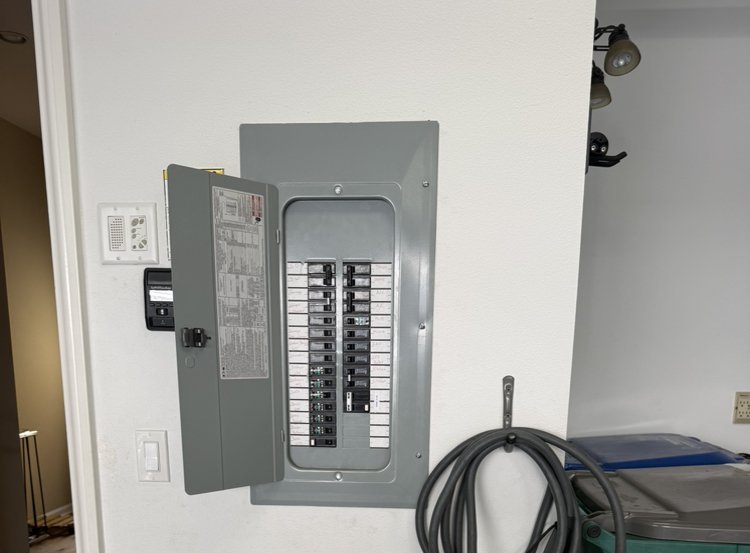
EV charging is a continuous load, so electrical codes generally require the circuit to be sized at 125% of the charger’s rating. That means a 40A charger needs a 50A circuit, and a 48A charger needs a 60A circuit. This is a safety rule, not an upsell, and it’s one reason we recommend a licensed electrician assess your electric panel before you buy hardware.
What Do Level 2 Chargers Cost?
Costs vary by region and the condition of your electrical system, so treat these as typical ranges rather than quotes:
- Charger hardware: commonly $400 to $1,000 for quality residential units. Commercial and networked units cost more.
- Professional installation: commonly $500 to $2,000 or more, depending on the distance from your panel to the parking spot, wiring, permits and whether your panel needs an upgrade.
- Running costs: an EV uses roughly 25–35 kWh per 100 miles. At a household rate of $0.15/kWh, that’s about $4–$5 per 100 miles, usually well below the fuel cost of a petrol car. Time-of-use tariffs can cut this further if you charge overnight.
Incentives change often. Federal tax credit rules for home charging equipment in the U.S. have been tightened, and the credit was scheduled to end for equipment placed in service after June 30, 2026. Many states, utilities and local governments still offer rebates, so check current programs where you live before you buy.
Do You Need a Level 2 Charger at Home?
Not everyone does. Here’s how we usually advise customers.
Level 2 is a strong fit if:
- You drive more than 30–40 miles a day.
- You have a larger battery (60 kWh or more).
- You want the convenience of waking up to a full battery.
- You have off-street parking or an assigned space.
You may be fine with Level 1 if:
- You drive under 30 miles a day.
- You can plug in for 12+ hours every night.
- You have a plug-in hybrid with a small battery.
In our experience, many customers start with Level 1, then upgrade within a few months once they realize how much easier daily life is with faster charging. If you’re buying an EV and already know your commute is longer, going straight to Level 2 saves you doing the work twice.
Connectors and Compatibility
Compatibility is the most common point of confusion, so check this before you buy:
- J1772 (Type 1): the traditional North American AC connector, used by most non-Tesla EVs.
- Type 2 (Mennekes): the standard AC connector in Europe and many other regions.
- NACS (SAE J3400): the Tesla-originated connector that many automakers have adopted for North America. Adapters are widely available, but check what your specific vehicle supports.
If you’re unsure, check your vehicle’s manual or manufacturer specification page for the inlet type and the maximum AC charging rate. A good installer will also confirm this for you during a site visit.
How Level 2 Charger Installation Works
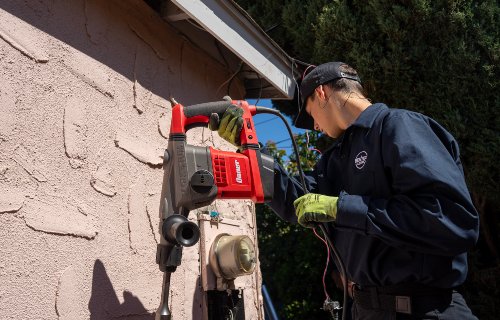
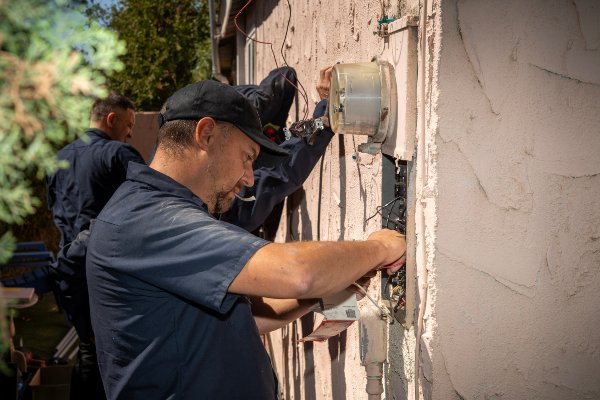
Here is what a typical installation involves, in the order we do it:
- Site assessment. We check your electrical panel’s capacity, the distance to the parking spot, and available breaker space. A load calculation confirms your home can safely handle the extra demand.
- Permit and code compliance. In many areas a permit is required, and the work must meet local electrical codes.
- Dedicated circuit. A new circuit is run from the panel, sized correctly for the charger, with proper wire gauge and a correctly rated breaker.
- Mounting and connection. The unit is mounted on a wall or pedestal and wired directly (hardwired) or connected through a suitable outlet (plug-in).
- Testing and commissioning. We test grounding, verify the ground-fault protection and run a charge session to confirm everything works before we leave.
Please don’t treat this as a DIY project. Incorrect wiring, undersized cables or poor connections can overheat under the sustained load of EV charging, which is a real fire risk. Use a licensed electrician who has experience with EV charging equipment.
Safety Features to Look For
Safe charging is about more than the plug. When comparing chargers, look for:
- Third-party safety certification such as UL, ETL or CE, depending on your region. If a charger lacks certification, don’t buy it, whatever the price.
- Built-in ground-fault protection (GFCI/CCID) and overcurrent protection.
- Weather rating appropriate for where you’ll install it (for example, NEMA 4 or IP54 or better for outdoor use).
- Temperature monitoring that reduces or stops charging if the unit or cable overheats.
- Good cable length and strain relief, so the connector doesn’t hang and wear at the plug.
Smart Features: Worth Paying For?
Many Level 2 chargers now include Wi-Fi or app connectivity. Features that provide genuine value include:
- Scheduled charging to take advantage of cheaper off-peak electricity.
- Energy tracking so you can see exactly how much charging costs.
- Load management, which lowers charging power when other big appliances are running, helping avoid an expensive panel upgrade.
- Over-the-air updates for long-term compatibility and security.
Features that are usually nice-to-have rather than essential include RFID card access (useful mainly for shared or commercial sites) and elaborate touchscreens.
Level 2 Charging for Apartments, Condos and Businesses
If you live in a multi-unit building, a Level 2 charger is often the best long-term solution, because it fits an overnight parking pattern and needs far less infrastructure than DC fast charging. Property managers typically install networked chargers that can bill individual users, and some regions have “right to charge” laws that make it easier for residents to request installation.
For businesses, workplace Level 2 charging is an increasingly valued perk. Employees park for hours, which is exactly the situation Level 2 is designed for. Networked chargers also let you set pricing, limit access and report usage.
Benitex Electric can help with the planning side, including how many ports you need, what your electrical capacity can support and how load management can keep costs down.
Common Mistakes to Avoid
Based on the projects we’ve seen, these are the mistakes that cost people the most:
- Buying a charger before checking the panel. The cheapest charger can become the most expensive project if your panel needs an upgrade.
- Oversizing the charger. A 48A unit won’t help if your car only accepts 7.2 kW.
- Ignoring cable length. Measure from the inlet on your car to the charger’s location, including where you actually park.
- Choosing an uncertified unit. Low-cost, uncertified chargers are a safety risk and can void insurance.
- Skipping the permit. Unpermitted work can cause problems with insurance claims and when you sell your home.
Frequently Asked Questions
Is a Level 2 charger worth it?
For most daily drivers, yes. It makes charging faster, more convenient and usually cheaper than relying on public fast chargers.
Can any EV use a Level 2 charger?
Yes, as long as the connector matches or you use an approved adapter. Every modern EV supports Level 2 AC charging.
Will a Level 2 charger damage my battery?
No. Level 2 charging is gentle on the battery and is generally considered the best routine charging method for battery longevity.
How much electricity does a Level 2 charger use?
It depends on the charger’s power and how long it runs. A 7.2 kW charger running for one hour uses 7.2 kWh, about the amount needed for roughly 25–30 miles of driving in an efficient EV.
Can I install a Level 2 charger outdoors?
Yes, if the unit is rated for outdoor use and installed correctly. Look for a suitable weather rating.
Do I need a special outlet?
Level 2 needs a dedicated 240V circuit. It can be hardwired or use a suitable outlet such as NEMA 14-50, depending on the charger and local code.
Final Thoughts
A Level 2 EV charger is the practical middle ground of EV charging: much faster than a standard outlet, far cheaper than DC fast charging and well suited to everyday use. The best choice depends on your vehicle, your daily mileage, your electrical panel and where you park.
At Benitex Electric, our goal is to give you honest, specific advice, whether that’s a straightforward plug-in unit or a full multi-bay installation. If you’d like help choosing or installing a Level 2 charger, contact our team for a site assessment and a clear, itemized quote.