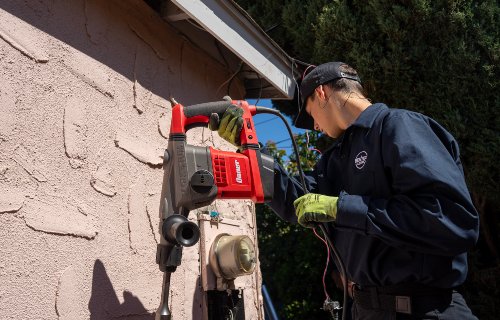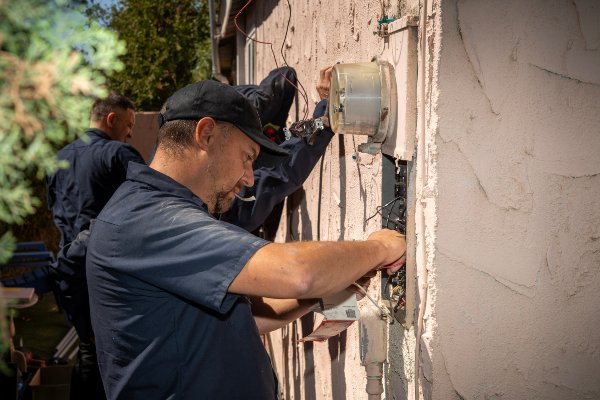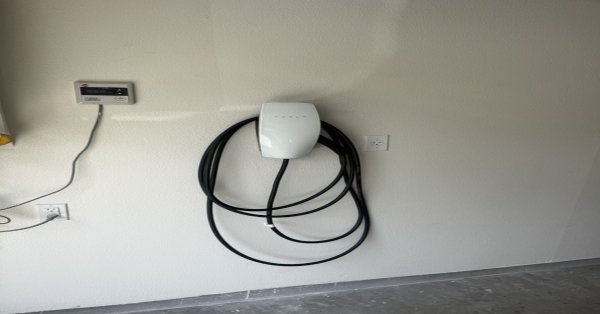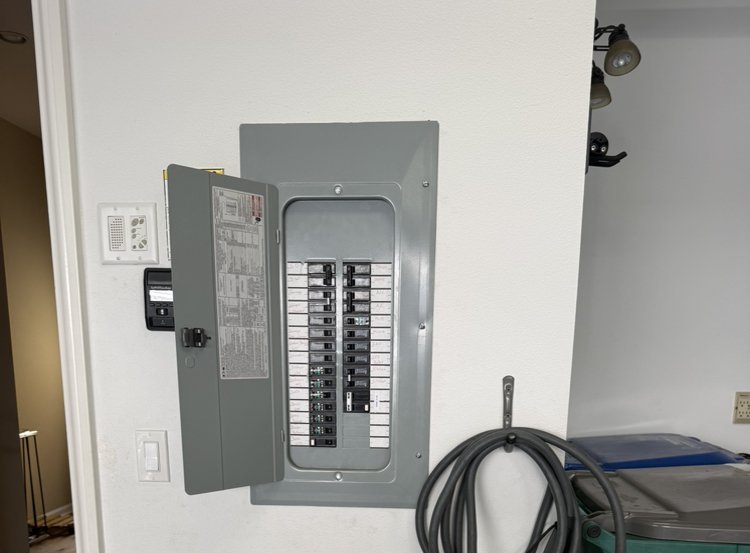
Quick answer: Upgrading an electrical panel costs $1,300 to $4,500 for a straight amp-for-amp replacement, and $2,000 to $6,500 if you’re increasing capacity (for example, going from 100-amp to 200-amp service). Full service upgrades that require your utility company to run new wire from the street can run $5,000 to $30,000, mainly driven by utility coordination, trenching, or pole work — not the panel itself.
Most homeowners in a typical single-family home land in the $1,800–$4,000 range for a 200-amp upgrade with permits included. Below, we break down exactly what drives that number up or down for your specific home.
Key Takeaways
- A basic panel swap (same amperage, same location) costs $1,300–$2,800
- Upgrading from 100-amp to 200-amp service typically runs $2,000–$4,500
- Full utility-coordinated service upgrades range from $5,000–$30,000 and can add months to your timeline
- Homes built before 1980 — nearly half of the U.S. housing stock — are the most likely to need an upgrade
- Permits typically add $50–$300, and skipping them can jeopardize your home insurance claim later
- Smart/load-managing panels ($3,000–$5,500) can be a cheaper alternative to a full service upgrade in some cases
Cost by Type of Panel Upgrade
| Upgrade Type | Cost Range | Typical Timeline | What’s Included |
|---|---|---|---|
| Panel replacement (same amperage, same spot) | $1,300 – $2,800 | 1 day | New panel, breakers, labor, basic permit |
| Panel + new circuits/subpanel | $1,800 – $4,000 | 1–2 days | Added circuits for appliances, EV, or additions |
| Amperage upgrade (100A → 200A) | $2,000 – $4,500 | 1–3 days | New panel, meter base work, permit, inspection |
| Full service upgrade w/ utility work | $5,000 – $30,000 | 3 weeks – 6 months | Utility coordination, new service line, possible transformer upgrade |
| Smart panel installation | $3,000 – $5,500 | 1–2 days | Load-managing panel, app monitoring, avoids service upgrade in many cases |
Cost by Amperage and Panel Size
| Current Panel | Upgrading To | Typical Cost | Common in Homes Built |
|---|---|---|---|
| 60-amp (fuse box) | 200-amp | $3,500 – $7,500 | Pre-1960 |
| 100-amp | 150-amp | $2,000 – $3,500 | 1960–1990 |
| 100-amp | 200-amp | $2,000 – $4,500 | 1960–2000 |
| 150-amp | 200-amp | $1,800 – $3,200 | 1980–2010 |
| 200-amp | 200-amp (replacement only) | $1,300 – $2,800 | Post-2000 |
| 200-amp | 300/400-amp | $4,500 – $11,000 | Homes adding solar, multiple EVs, or workshops |
Why older homes cost more: If your panel still uses fuses or knob-and-tube wiring, an inspector may require additional rewiring before a permit is issued — which can add $8,000–$25,000 on top of the panel itself. This is common in homes built before 1960.
How Electricians Calculate the Panel Size You Actually Need
A lot of homeowners assume “bigger is always better,” but a licensed electrician doesn’t guess your amperage — they run a load calculation based on the National Electrical Code. In simple terms, this adds up:
- Square footage of your home (a base wattage allowance)
- Fixed appliances (range, water heater, dryer, HVAC)
- Planned additions (EV charger, hot tub, pool pump, workshop tools)
- A demand factor that accounts for the fact you’re not running everything at once
The result tells your electrician whether your existing service can handle your actual draw, or whether you genuinely need more amperage — versus just needing a smarter breaker layout. This is worth asking about directly: any quote you get should include a load calculation, not just an eyeball estimate. Skipping this step is one of the most common ways homeowners end up paying for capacity they didn’t need, or under-sizing a panel that fails inspection later.
What Actually Drives the Price Up or Down
Your quote isn’t just “panel + labor.” Here’s what an electrician is actually pricing in:
- Whether the meter and service wire need to change. A same-amperage swap avoids this; an amperage increase almost always requires it.
- Utility coordination. If your utility has to schedule a disconnect/reconnect or upgrade a transformer, you’re paying for their timeline, not just the electrician’s.
- Panel location. Panels in finished basements, tight closets, or requiring relocation cost more in labor than an easily accessible garage panel.
- Local permit and inspection fees. These range from about $50 to $300 depending on your municipality, and most jurisdictions require a licensed electrician to pull the permit.
- Panel brand and breaker compatibility. If you’re keeping some existing breakers, compatibility with the new panel’s bus bar matters — mismatched brands often mean buying all-new breakers.
- Added loads. EV chargers, hot tubs, heat pumps, and solar all increase the calculated load and can push you into a higher amperage requirement than you’d otherwise need.
- Labor market. Licensed electrician rates vary regionally — expect higher costs in areas with higher cost of living and stricter permitting, and lower costs in markets with more competition among contractors.
Signs You Actually Need a Panel Upgrade
Not every home needs one. These are the reliable signs it’s time:
- Breakers trip regularly when running normal appliances at the same time
- You still have fuses instead of breakers
- The panel is rated 60 or 100 amps and you’re adding an EV charger, hot tub, or major appliance
- You see rust, scorch marks, or a burning smell near the panel
- Your panel brand is Federal Pacific (FPE) or Zinsco — both have documented breaker-tripping failures
- A home inspector flagged it during a purchase or refinance
This isn’t just anecdotal caution. The U.S. Fire Administration (part of FEMA) reports that residential electrical malfunctions caused an estimated 23,700 home fires in 2023 alone, resulting in 305 deaths, 800 injuries, and over $1.5 billion in property damage — and notes that dollar losses from these fires rose 28% over the prior decade even as overall fire counts stayed roughly flat. Source: U.S. Fire Administration, FEMA
The Consumer Product Safety Commission also publishes a simple age-based rule of thumb for homeowners: if your panel hasn’t been inspected in 40+ years, an inspection is overdue; if it’s been 10–40 years, an inspection is advisable — especially if you’ve added high-wattage appliances since. Source: U.S. Consumer Product Safety Commission
That age window matters more than most homeowners realize: according to National Association of Home Builders analysis of U.S. Census Bureau American Community Survey data, roughly 47% of owner-occupied U.S. homes were built before 1980, and the median age of owner-occupied housing has climbed to 42 years as of 2024. Source: NAHB Eye on Housing, citing U.S. Census Bureau ACS data That means a large share of U.S. homes are sitting well past the CPSC’s advisable-inspection window on panels that predate modern load demands entirely.
Ways to Lower the Cost
You don’t always need a full $5,000+ service upgrade. Depending on your situation, these can save money:
| Alternative | Cost | Best For |
|---|---|---|
| Subpanel addition | $800 – $2,200 | Adding circuits without increasing total service capacity |
| Smart circuit breakers / load management | $600 – $1,500 | Managing high-draw appliances without a full upgrade |
| Circuit-sharing device (EV + dryer, etc.) | $400 – $1,000 | Sharing one 240V circuit between two appliances |
| Smart panel | $3,000 – $5,500 | Whole-home load management, often avoids utility coordination entirely |
These alternatives typically cost 60–90% less than a full utility-coordinated service upgrade and can be installed in days rather than months.
Permits, Inspections, and Timeline
Nearly every jurisdiction requires a permit for a panel upgrade, and for good reason — it’s one of the few home projects where a bad install is a genuine fire and shock hazard. Expect:
- Electrician assessment (often free with a quote) to determine your current load and target amperage
- Permit filing — usually pulled by your electrician, $50–$300 depending on locality
- Installation — 1 day for a straight swap, up to a few days for a service increase
- Inspection by your local building department before the panel is energized
- Utility coordination, if required — this is the step that can add weeks to months
Never let anyone talk you into skipping the permit to save money. Unpermitted electrical panel work is a common reason home insurance claims get denied after a fire, and it becomes a disclosure issue when you sell.
Financing a Panel Upgrade
If a full service upgrade is on the higher end of the range, you have more options than paying cash upfront:
- Contractor financing — many electrical companies (including Benitex Electric) offer monthly payment plans, often with promotional 0% windows
- Home equity line of credit (HELOC) — makes sense if you’re bundling the panel with other renovation work
- Utility or state rebate programs — some states offer rebates when a panel upgrade is done specifically to support electrification (heat pumps, EV chargers maintenance, induction cooking). Availability and amounts vary significantly by state and utility, so check your local program directly rather than assuming eligibility.
- Homeowners insurance discounts — a few insurers offer modest premium reductions after replacing a known hazard panel (like FPE or Zinsco), since it lowers their fire risk exposure. Ask your carrier directly.
How to Vet an Electrician for This Job
Panel upgrades are not the project to shop purely on price. Before hiring:
- Confirm they’re licensed and insured in your state — ask for the license number and verify it if your state has a public lookup
- Ask whether the quote includes a load calculation, not just a visual estimate
- Confirm who pulls the permit — it should be the electrician, not you
- Ask what happens if the inspection fails — a reputable contractor covers rework at no extra charge
- Get the amperage, panel brand, and breaker count in writing, not just a lump-sum price
Frequently Asked Questions
Is a 100-amp panel enough for a modern home?
For a smaller home without an EV, hot tub, or electric heat pump, 100 amps can still work. Once you add any of those, most electricians recommend moving to 150 or 200 amps.
How long does a panel upgrade take?
A same-location, same-amperage swap is usually done in a single day. An amperage increase with utility coordination can take anywhere from a few days to several months, depending on your utility’s scheduling.
Do I need a permit to upgrade my electrical panel?
Yes, in nearly every U.S. jurisdiction. It protects you legally and is required for the work to pass inspection and stay valid for insurance purposes.
Will my power be off during the upgrade?
Yes, typically for a few hours during installation. Full service upgrades requiring utility disconnects may need a scheduled outage window coordinated in advance.
Can I upgrade my own panel to save money?
No. Panel work involves the main service disconnect and can be lethal without proper training and lockout procedures. It also requires a licensed electrician to pull a permit in most areas.
Does homeowners insurance cover panel upgrades?
Generally no — insurance doesn’t pay for proactive upgrades. However, some insurers require you to replace known hazard panels (like FPE or Zinsco) to keep or renew a policy, and a few offer small premium discounts once it’s done.
How do I know if my panel is a fire hazard versus just outdated?
Outdated means it works fine but lacks capacity for modern loads. A hazard means there’s a documented failure pattern (like FPE or Zinsco breakers not tripping) or visible damage — scorch marks, rust, a burning smell, or breakers that won’t reset. Hazards should be addressed immediately; outdated panels can usually be scheduled.
Get a Firm Quote from Benitex Electric
Every home’s wiring, load, and utility situation is different — the only way to know your real number is a load calculation from a licensed electrician. Benitex Electric offers free on-site assessments and gives you a fixed quote before any work begins, no utility-coordination surprises added later.
[Schedule Your Free Panel Assessment →]