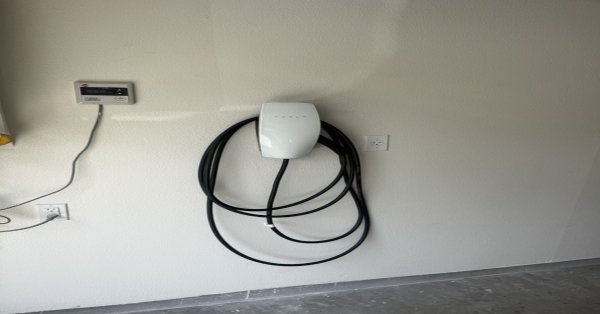
Finding out your home’s total electrical capacity isn’t just a matter of curiosity—it’s a fundamental step before adding major modern appliances like a Level 2 EV charger, a heat pump, a hot tub, or an induction range.
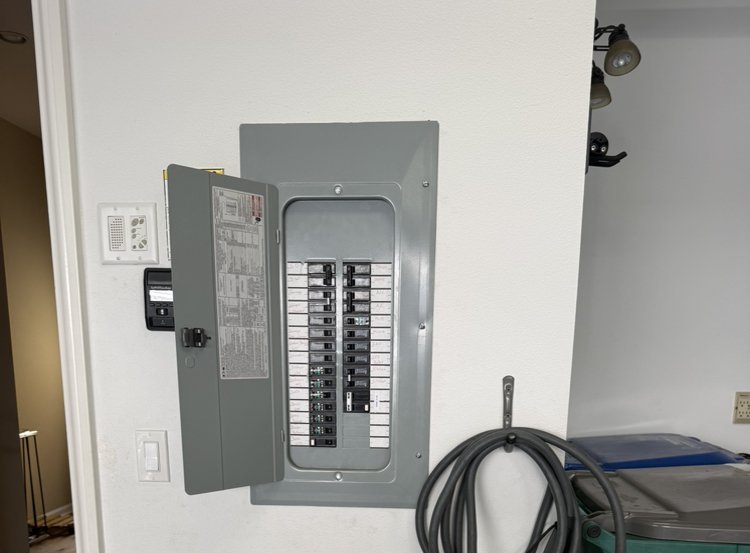
If you just need a quick answer: Check your main circuit breaker located inside your main breaker box or outside next to your electric meter. Look for a large double-pole breaker at the top or bottom with a number stamped on its switch handle—typically 100, 125, 150, or 200. That number represents your home’s total main electrical service amperage rating.
However, knowing the physical size stamped on the handle tells only half the story. The real secret to preventing blown fuses and fire risks is knowing how much of that total capacity your household is currently using and how much headroom remains.
1. Locate and Read Your Main Electrical Service Panel
To figure out your main service limit, you’ll need to inspect your main panelboard.
- Find your panel box. It’s usually located in a garage, basement, utility room, or mounted on an exterior wall near your utility meter.
- Open the panel door. Look for the largest single breaker switch, typically situated separate from or above the two vertical columns of branch circuit breakers.
- Read the main switch handle rating.
- 100 Amps: Standard for older built homes (pre-1970s) or smaller single-family properties without heavy electrical loads.
- 125 / 150 Amps: Common transition sizes found in homes built or remodeled between 1970 and 1990.
- 200 Amps: Modern standard for average-to-large single-family homes built after 1990, capable of supporting central air conditioning and standard modern electronics.
- 300 / 400 Amps: Heavy-duty setups found in sprawling modern residences, luxury custom homes, or properties with high concurrent electrical demands like dual EV chargers and multiple HVAC units.
⚡ MAIN ELECTRIC SERVICE PANEL
Main Panel vs. Subpanel: Don’t Get Confused
It’s easy to mistake a subpanel for your main distribution service. Subpanels are secondary breaker boxes installed in garages, workshops, or additions to distribute power to specific zones. A subpanel has a feeder breaker that limits that specific area, but it does not dictate your home’s overall electrical supply limit.
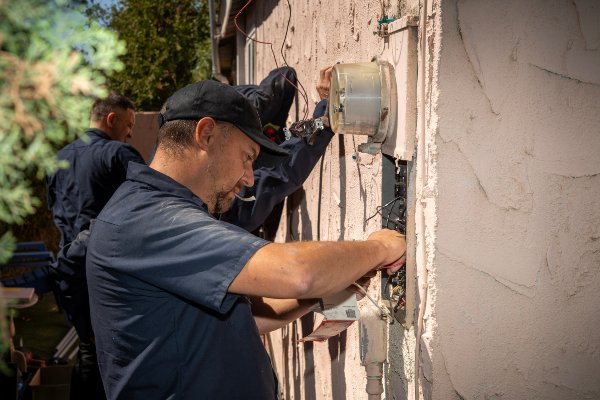
If your panel box doesn’t have a main shutoff breaker inside, look outside right next to your utility smart meter. Many modern building codes require a main disconnect breaker switch placed outdoors next to the electric meter for firefighter safety.
2. Main Breaker Rating vs. Service Wire Capacity vs. Actual Load
Understanding your electrical capacity requires separating three distinct physical components:
[ Utility Supply Line ] ===> [ Meter Enclosure / Main Breaker ] ===> [ Branch Circuits / Household Load ]
- Main Breaker Ampere Rating: The mechanical trip point designed to shut off power if total continuous current draws too much amperage through the busbar.
- Service Entrance Conductor Capacity: The copper or aluminum service entrance wires bringing electricity into your main panel enclosure. Aluminum conductors require larger gauge sizes than copper to safely carry equivalent amperages without overheating insulation.
- Calculated Electrical Load: The actual sum of electricity your lighting, appliances, and mechanical systems consume simultaneously under normal daily use.
Crucial Safety Note: A 200-amp main breaker switch does not automatically mean your property safely delivers 200 amps of usable electricity. If an older panel was modified with an upgraded 200-amp breaker but the incoming utility conductors or meter socket are rated for only 100 or 125 amps, you face a major electrical hazard.
3. How to Do a Load Calculation (NEC Article 220)
Before plugging in a high-draw appliance like a Level 2 electric vehicle charger, simply reading the 100A or 200A label on your main switch isn’t enough. You must calculate your current electrical load using National Electrical Code (NEC) Article 220 standards.
When evaluating whether your setup can handle new additions, home homeowners frequently ask can my home electrical panel handle an ev charger, before buying an electric car. Running a quick load calculation prevents unexpected breaker trips and keeps your equipment operating safely.
The Standard NEC Load Calculation Math
Electricians don’t simply add up every circuit breaker handle’s amp rating inside your box (doing so would give you an artificially high, inaccurate total). Instead, they apply NEC demand factors that account for the reality that you never turn on every light bulb, oven burner, hair dryer, and clothes washer at the exact same second.
Here is the step-by-step formula to estimate your general demand load:
⚡ Calculate Your Home’s Total Electrical Load
Step 1: Calculate Square Footage & General Receptacle Load
Multiply your home’s total living space by 3 VA per square foot.
- 1,500 VA for each 20-amp kitchen small-appliance circuit
- 1,500 VA for the laundry circuit
General Lighting:
2,000 × 3 VA = 6,000 VA
Kitchen Circuits (2):
3,000 VA
Laundry Circuit (1):
1,500 VA
Subtotal 1 = 10,500 VA
Step 2: Apply NEC Demand Factors
Apply the demand scaling described in the calculation:
Step 3: Add Heavy Fixed Electric Appliances
Add the nameplate ratings of major dedicated electric appliances:
| Appliance | Load |
|---|---|
| Electric Clothes Dryer | ~5,000 VA |
| Electric Water Heater | ~4,500 VA |
| Electric Range/Oven | ~8,000 VA |
| Subtotal 2 | 17,500 VA |
Step 4: Account for Heating & Cooling
Compare the air-conditioning and electric-heating loads and use the larger value for this calculation.
Step 5: Total VA & Convert to Amps
────────────
33,125 VA
In this scenario, a 100-amp service is completely maxed out and unsafe, while a 200-amp main panel service provides comfortable headroom for daily living and future additions.
4. Physical Indicators You Might Be Out of Electrical Space
Beyond performing calculations on paper, physical clues inside and outside your panel indicate whether your electrical distribution setup is struggling under modern demands.
| Component / Symptom | What It Indicates | Action Needed |
| No Open Slots (Tandem Breakers Used) | Physical busbar space is exhausted. Tandem double-stuff breakers are filling every slot. | Panel upgrade or subpanel installation required for expansion. |
| Outdated Brand Names (Zinsco, Federal Pacific, Pushmatic) | Obsolete, dangerous design prone to breaker failure, internal arc fires, or failing to trip. | Full service upgrade recommended regardless of amp rating. |
| Rust or Corrosion Inside Box | Moisture entering through external service entrance mast head or failing weather seals. | Immediate professional inspection to stop live wire arcing. |
| Warm Main Switch or Buzzing Sounds | Loose busbar connections, oxidation, or active thermal overload across main lugs. | Immediate emergency repair by a licensed electrician. |
| Flickering Lights When Appliances Start | Voltage drops caused by high inrush current overloading panel capacity. | Perform a formal load calculation; service upgrade likely needed. |
If you notice any of these signs while checking your panel, learn more about 7 warning signs your electrical panel is outdated
to prevent potential home hazards.
5. What to Do if Your Panel Size Is Too Small
If your load calculation or home electrification upgrades exceed your existing service capacity, you have a few practical options to explore:
Option A: Complete Electrical Main Service Panel Upgrade
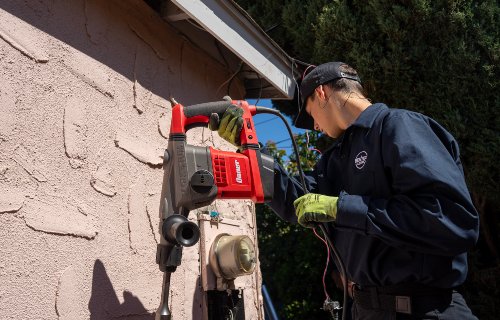
Upgrading from an older 100-amp panel to a modern 200-amp service is the cleanest, most future-proof solution for modern electrification. To better understand the steps and scope involved in this project, review our comprehensive breakdown on when and how to upgrade your electrical panel.
Option B: Installing Smart Load Management Energy Controllers
If upgrading your main service panel is cost-prohibitive or delayed by local electric utility approval timelines, you can install an automatic load-shedding switch or smart breaker box. These systems automatically monitor overall power draw and temporarily pause lower-priority loads (like EV charging) whenever high-draw appliances (like an electric dryer or oven) turn on, preventing breaker trips without requiring a complete service wire upgrade.
Option C: Adding a Subpanel
If your existing main breaker amperage rating is sufficient (e.g., 200 amps) but you’ve run out of physical knockout slots to land new circuit breakers, installing a subpanel provides additional circuit breaker spaces without requiring a change to your utility service entrance line.
At Benitex Electric, our team of licensed master electricians specializes in performing precise NEC load calculations, main panel service upgrades, and specialized EV charger circuit installations across Southern California. Contact our expert team today to schedule an on-site load evaluation and safeguard your home’s power supply.
Frequently Asked Questions
Can I upgrade my main panel breaker from 100 amps to 200 amps myself?
No. Upgrading a main electrical panel requires pulling a permit, coordinating an electrical service drop disconnection with your local utility power provider, and working inside live main lugs that cannot be shut off at a breaker. This work must always be performed by a licensed master electrician to comply with local building codes and prevent severe electric shock or fire hazards.
What is the minimum recommended panel size for a Level 2 EV charger?
A 200-amp electrical panel is highly recommended for installing a Level 2 EV charger. While some 100-amp homes can accommodate a low-amp EV charger (16A to 24A charging rate), standard 40A or 48A chargers usually require a dedicated 50A or 60A double-pole circuit breaker, which often exceeds the safe capacity of a 100-amp service panel without active load management.
Is a 150-amp panel enough for a modern single-family home?
A 150-amp panel can support an average single-family home using gas appliances for space heating, water heating, and cooking. However, if you plan to fully electrify your home by adding heat pumps, an induction stove, an electric water heater, and an electric vehicle charger, a 200-amp panel is usually necessary to maintain safe continuous load margins.
What is the 80% rule for electrical panels and continuous loads?
The National Electrical Code (NEC) specifies that a circuit or panel should not operate at more than 80% of its total rated capacity for continuous loads (loads running continuously for 3 hours or longer). For example, a 200-amp service panel should not carry more than 160 amps of continuous electrical load.
How do I know if my panel is a subpanel or a main panel?
A main service panel usually contains a main disconnect breaker (typically rated 100A–200A) that shuts off power to the entire property. It also features a bonded neutral busbar where neutral wires and ground wires connect together. In contrast, subpanels keep neutral and ground wires isolated on separate busbars and receive power from a feeder breaker inside the main panel.