You’re excited. You just bought an electric vehicle, or you’re thinking about it. You want to charge it at home so you don’t have to wait in line at a public charging station. Sounds perfect, right?
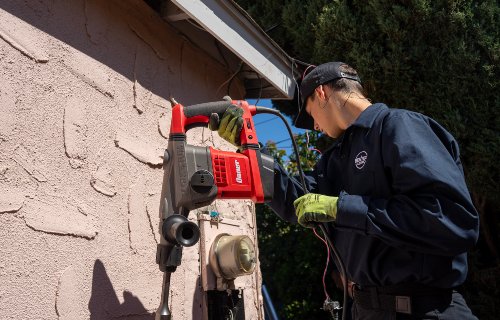
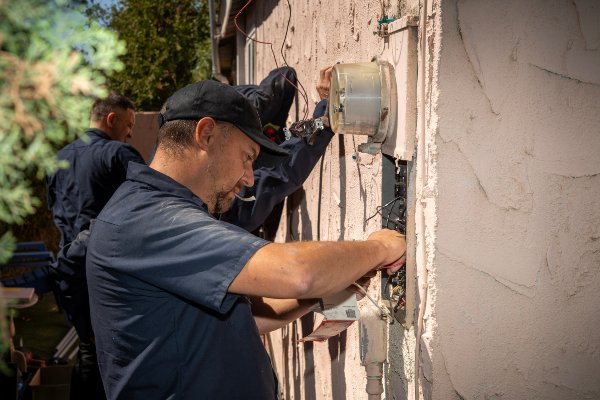
Then you call an electrician to talk about installing a charger. And they say something like: “You might need to upgrade your electrical panel. That could cost $3,000 to $5,000.”
Your excitement just took a nosedive.
But wait—before you accept that quote, you need to know something important: that electrician might be wrong. Or at least, they might be giving you only part of the story.
Here’s the truth: most homes can handle an EV charger without a major panel upgrade. About 80% of homes are actually fine. It just depends on what you’ve already got in there. Let me walk you through how to figure out if you’re one of the lucky ones, or if an upgrade is really necessary.
First, Let’s Talk About What Your Electrical Panel Actually Does
Think of your electrical panel like the main water valve for a house. The panel is like that valve—it controls how much power flows into your home from the power company. Everything that uses electricity in your house—your lights, your refrigerator, your air conditioner, your clothes dryer—all of that power comes from that panel.
Now, there’s a limit to how much water (or in this case, electricity) can flow at one time. That limit is measured in “amps” (short for amperes). Your panel has a total amount of amps it can handle, like 100 amps or 200 amps.
An EV charger is kind of like adding a new pipe to your house—a pretty big pipe that uses a lot of water (electricity). The question is: does your main valve (panel) have enough capacity to handle that new, big pipe along with everything else already running?
That’s the real question. Not “how old is your panel?” but “how much power does it have left?”
The Two Ways to Charge Your EV at Home
Before we go further, you should know there are different charging speeds:
Level 1 Charging – This is what you get if you just plug your EV into a regular household outlet. It’s slow. We’re talking 3-5 miles of range per hour. But here’s the good news: you don’t need any upgrades for this. You can do it today. It’s perfect if you only drive 20-30 miles a day and can charge overnight. However, if you have a longer commute or want faster charging, you’ll want something better.
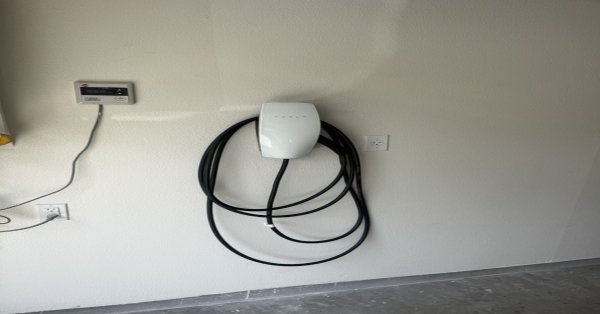
Level 2 Charging – This is what most people choose. It plugs into a 240-volt outlet (same type as your electric stove or dryer uses). It charges way faster—about 20-30 miles of range per hour. That means an overnight charge could give you 100+ miles for your next day. This is where you might need an electrical upgrade, depending on your situation.
Level 3 (DC Fast Charging) – This is the stuff at gas stations and along highways. It’s commercial-grade. You don’t need this at home, so let’s not worry about it.
Most homes should go with Level 2. It’s fast enough for daily life, and it fits what most people’s homes can handle.
How to Check Your Panel in 5 Minutes
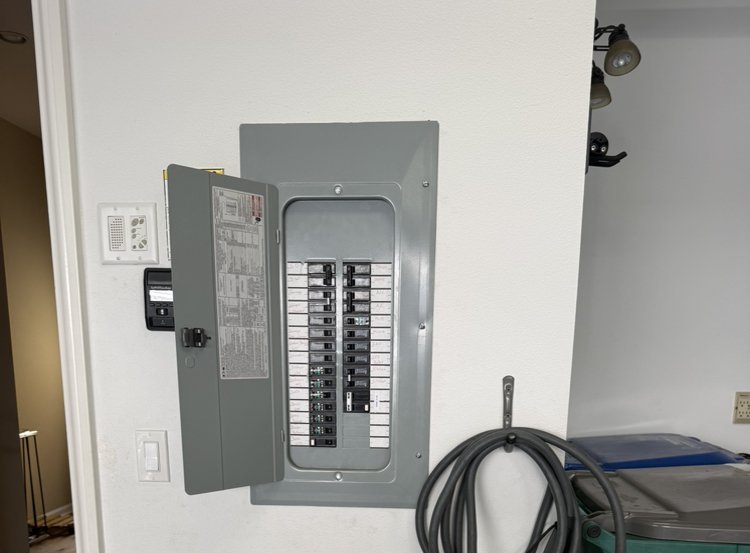
You can actually do this yourself right now. Go find your electrical panel (usually in the basement, garage, or outside on the wall).
Look for the biggest breaker switch at the very top or bottom. That’s your main breaker. It has a number printed on it. That number is your panel’s total capacity. Write it down.
Most homes have one of these:
- 100 amps (older homes, built before 1990)
- 150 amps (homes from the 1990s)
- 200 amps (newer homes, built since 2000)
If your number is 200 amps, you’re probably in good shape. If it’s 100 amps, you might be okay, but we need to dig deeper. If it’s 60 amps or less, you’ll probably need an upgrade (but honestly, you probably needed one anyway).
Also, count the empty breaker slots. You’ll need two empty slots side by side for a Level 2 charger. If your panel is completely full with no empty spaces, that’s something to tell an electrician about.
Here’s the Thing Nobody Explains Well: The 80% Rule
This is important, so stick with me. The National Electrical Code (the rulebook electricians follow) has a rule about charging. It says that if something is going to run for a long time—like an EV charger that’s plugged in for hours—the breaker protecting it needs to be bigger than you might think.
Here’s what that means in simple terms:
If you want a charger that uses 40 amps, you actually need a 50-amp breaker to protect it. Why? Because continuous use creates heat, and the breaker needs extra size to be safe.
This matters because it tells you whether your panel can actually handle what you want:
- Want a 40-amp charger? You need a 50-amp breaker available.
- Want a 32-amp charger? You need a 40-amp breaker available.
- Want a 24-amp charger? You need a 30-amp breaker available.
- Want a 16-amp charger? You need a 20-amp breaker available.
But here’s the thing: you might not need the fastest charger. A 24-amp charger gives you about 20 miles of range per hour. That means overnight charging (say, 8 hours) gives you 160 miles. That’s enough for most people’s daily driving. So if your panel can handle 24 amps but not 40 amps, that’s actually fine.
The Real Secret: Get a Load Calculation
Here’s what most electricians don’t tell you upfront: they need to calculate how much power your home is already using before they can tell you if you have room for an EV charger.
This is called a “load calculation.” It’s not complicated. An electrician will look at:
- Your HVAC system (heating/cooling)
- Your water heater (electric or gas?)
- Your stove (electric or gas?)
- Your dryer (electric or gas?)
- Everything else that uses electricity
Then they calculate: “Okay, this family uses about X amount of power. That means they have Y amount left over.”
This costs $100-$300 usually. Sometimes an electrician will do it free if you hire them for the installation. But get this number before you agree to anything. This number tells you the truth.
Example: “You have a 200-amp panel. Your home’s power needs are about 140 amps. That means you have 60 amps available. You can install a 40-amp charger with no problem.”
That’s the conversation you want to have.
Not Everyone Needs an Upgrade
Here’s a realistic breakdown:
If you have 200 amps total: You’re probably fine. Most newer homes with 200-amp panels can handle a Level 2 charger without any upgrades at all. About 80-90% of homes with 200-amp panels don’t need an upgrade. Assuming you have gas heat and gas hot water, you almost certainly don’t need anything.
If you have 100-150 amps: You might be fine. It depends on what else you have. If you have a newer 150-amp panel and mostly gas appliances, you could probably support a 24-amp charger (which is actually plenty). If you have an older 100-amp electric panel with all electric appliances, you might need an upgrade. You need that load calculation.
If you have 60 amps or less: You probably need an upgrade anyway. That’s really old and doesn’t handle modern homes well. An EV charger is just the final straw.
Watch Out for These Red Flags
Before you even worry about an EV charger maintenance, check if your panel is already struggling:
- Do your breakers trip a lot? Like, every few months something trips? That means your panel is working hard.
- Do your lights flicker when the AC turns on? That’s a sign your panel can’t quite handle everything.
- Do any outlets feel warm? That’s bad. Don’t ignore that.
- Do you smell something burning near the panel? Stop. Call an electrician immediately. This is serious.
- Is there visible rust or water in the panel? That’s also serious.
- Do you have a fuse box instead of a breaker panel? That’s really old (1970s or earlier), and it needs to be replaced.
If you see any of these things, an upgrade is definitely necessary, whether you get an EV charger or not.
Okay, So I Might Not Need a Full Upgrade. What Are My Options?
Let’s say you get that load calculation and the news isn’t perfect. You have, say, 30 amps available instead of the 40 or 48 you might have wanted. What do you do?
Option 1: Just Get a Slower Charger You can buy a charger that adjusts its speed. Some chargers let you dial them down to 24 amps or even lower. That still gives you 20 miles of range per hour, which is plenty for most people. These chargers often cost $400-$1,200. No upgrade needed.
Option 2: Add a Load Management System This is cool technology that most people don’t know about. Basically, it watches your home’s power in real-time. When you’re using a lot of power elsewhere (AC running, dryer going, etc.), it automatically reduces your charger speed. Then when other things turn off, it speeds the charger back up. It costs $1,500-$3,000 installed, but it’s way less than a full panel upgrade ($2,500-$5,000). Benitex Electric can explain how this works for your specific home.
Option 3: Add a Sub-Panel Instead of replacing your whole main panel, you add a smaller secondary panel. It costs less ($1,200-$2,500) than replacing the whole panel ($2,500-$5,000). This works if you have enough total power available but your main panel is just full of breakers.
Option 4: Do a Tandem Breaker Swap Some panels can fit two breakers in one slot using something called a tandem breaker. This costs $200-$500. It only works for certain panel types, but if your electrician says your panel supports it, it’s a super cheap solution.
The point is: a $3,500 panel upgrade might not be your only choice. Explore these options with an electrician before you accept the expensive quote.
Real Examples: What It Might Look Like for You
Example 1: You have a newer 200-amp panel with gas heat, gas water heater, and a gas stove. Good news! You probably have 50+ amps available. You can get a 40-amp charger with no upgrades at all. Cost: $1,200-$2,000 for installation only.
Example 2: You have a 100-amp panel with electric heat, electric water heater, and electric stove. This is tight. You probably have only 20-30 amps available. You could get a 24-amp charger (or 16-amp if you want to be safe) without any upgrades. That gives you 18-22 miles of range per hour, which is actually plenty. Cost: $1,200-$2,000 for installation only.
Example 3: You have a 150-amp panel, mixed appliances, and your panel is completely full with breakers. You have the power, but no room. A sub-panel costs $1,200-$2,500. Still way less than replacing the main panel. Cost: $1,500-$3,500 total.
Example 4: You have a 60-amp fuse box from 1965. Yeah, you need a full upgrade. This should have been done years ago. Your electrician is right. Cost: $2,500-$5,000.
Questions to Ask Your Electrician
When an electrician comes out, ask these questions. If they get annoyed or won’t answer clearly, call someone else. A good electrician should be happy to explain:
- “Can you do a load calculation first? I want to know exactly how many amps I have available.” (This is important. Don’t let them skip this.)
- “Based on that calculation, what’s the fastest charger I can safely use right now?”
- “If I want a faster charger, what’s the cheapest way to make that happen?” (They might mention load management or a sub-panel, which is good.)
- “Are you licensed and insured?” (Always check.)
- “Will this installation need a permit and inspection?” (It should. If they say no, that’s a red flag.)
- “Can I talk to someone who had you install a charger?” (References matter.)
Will This Really Cost Me a Fortune to Run?
Nope. A Level 2 charger running overnight (say, 8 hours) uses about 20-30 kilowatt-hours of electricity. At the average US rate of about $0.14 per kilowatt-hour, that’s about $3-$4 per night. Call it $100-$120 per month if you charge every single night.
For comparison, that’s way cheaper than gas. An EV goes about 3-4 miles per kilowatt-hour. So for $100, you’re getting 300-400 miles of driving. A gas car at 25 miles per gallon doing the same 300-400 miles would cost you $40-$50 in gas.
So no, it won’t break your bank.
The Bottom Line
Before you accept anyone’s quote for a $3,500 panel upgrade, do this:
- Check what size panel you have.
- Call an electrician and ask for a load calculation ($100-$300).
- Based on that number, figure out what charger speed you can actually use.
- Ask about load management or sub-panel options before agreeing to a full upgrade.
Maybe you really do need an upgrade. But maybe you don’t. And the only way to know is to get that load calculation.
At Benitex Electric, we start with the load calculation every single time. Not because we’re nice guys (though we try to be), but because it’s the only honest way to know what you really need. We’ve seen a lot of homeowners get quoted $4,000 for a panel upgrade when a $1,500 load management system would have solved everything. We want to help you avoid that.
The electric vehicle revolution is here. Your home should be part of it. But you deserve to know the real cost before you commit.
Quick Answers to Common Questions
Q: Can I just plug my charger into a regular outlet? A: You can use Level 1 (regular outlet), but it’s slow. If you need faster charging, you need an electrician to install a 240V outlet.
Q: My panel is 30 years old. Does it definitely need replacing? A: No. A 200-amp panel from 1995 is probably fine if it’s not rusted and you have available space. What matters is available power, not age.
Q: How long does installation take? A: If no panel work is needed, about 2-4 hours. If you need a sub-panel or upgrade, 1-3 days.
Q: Can I do this myself? A: No. Even plugging in a 240V charger requires an electrician and usually a permit. Don’t DIY this.
Q: Will my electric bill go way up? A: No. You’ll use an extra $100-$150 per month if you charge every night, which is way cheaper than gas.
Contact Benitex Electric for an honest assessment. We’ll do the load calculation, tell you what you really need, and explore all your options—not just the most expensive one.